

Business owner reviewing LLC formation documents at a desk
How Much Does It Cost to Start an LLC?

Starting an LLC? You're probably expecting a simple answer—maybe a single filing fee. That's not how this works.
Between state governments, service providers, and ongoing compliance requirements, you'll encounter dozens of potential expenses. Some you can't avoid. Others depend entirely on choices you make.
I've seen business owners launch LLCs for under $50 in Kentucky. I've also watched California entrepreneurs drop $3,000 in their first year. Geography matters. Your formation approach matters even more.
Let's break down every dollar you might spend, separating the unavoidable costs from the optional upgrades that might not deliver value.
State Filing Fees for LLC Formation
Every state's business filing office—usually the Secretary of State—charges you to process your Articles of Organization. This document legally creates your LLC.
Kentucky asks for just $40. Massachusetts demands $500. Most states fall somewhere between $75 and $200.
But here's where it gets tricky: California's $70 filing fee looks reasonable until you learn about the $800 yearly franchise tax that hits you regardless of whether you've made a single sale. New York charges $200 upfront, then requires newspaper publication of your formation notice—a bizarre requirement that'll cost you anywhere from $500 to $2,000 depending on which county you're in. Try forming in Manhattan versus a rural county. The price difference is staggering.
Want your paperwork processed faster? Most states offer expedited service. You'll pay an extra $25 to $100 to cut processing time from the standard two weeks down to just a few days. Delaware and Nevada offer same-day processing if you're willing to pay $100-$200 on top of regular fees.
Author: Olivia Carrington;
Source: worldwidemediums.net
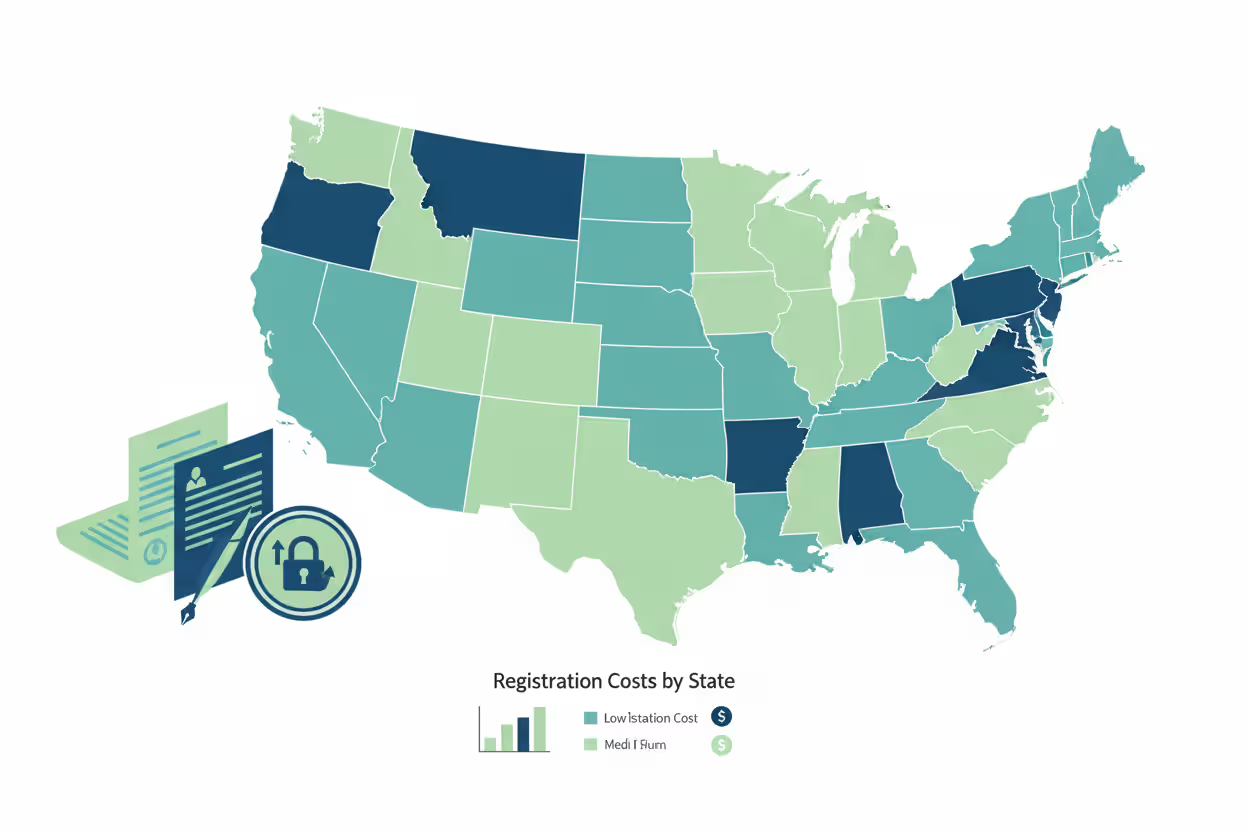
Here's what every state charges to form an LLC and keep it running:
| State | Formation Fee | Yearly Compliance Cost | Typical Wait Time |
| Alabama | $200 | $100 | 10-15 days |
| Alaska | $250 | $100 | 15 days |
| Arizona | $50 | $0 | 5-10 days |
| Arkansas | $45 | $150 | 7-10 days |
| California | $70 | $820 total | 10-15 days |
| Colorado | $50 | $10 | 7-10 days |
| Connecticut | $120 | $80 | 10 days |
| Delaware | $90 | $300 | 7-10 days |
| Florida | $125 | $138.75 | 7 days |
| Georgia | $100 | $50 | 7-10 days |
| Hawaii | $50 | $15 | 5-10 days |
| Idaho | $100 | $0 | 10 days |
| Illinois | $150 | $75 | 10-15 days |
| Indiana | $95 | $32 | 7 days |
| Iowa | $50 | $45 | 5-7 days |
| Kansas | $160 | $55 | 7-10 days |
| Kentucky | $40 | $15 | 10 days |
| Louisiana | $100 | $35 | 10-15 days |
| Maine | $175 | $85 | 10 days |
| Maryland | $100 | $300 | 7-10 days |
| Massachusetts | $500 | $500 | 10-15 days |
| Michigan | $50 | $25 | 7-10 days |
| Minnesota | $135 | $0 | 7 days |
| Mississippi | $40 | $0 | 10 days |
| Missouri | $50 | $0 | 7-10 days |
| Montana | $35 | $20 | 10 days |
| Nebraska | $100 | $13 | 7 days |
| Nevada | $425 | $350 | 10 days |
| New Hampshire | $100 | $100 | 10 days |
| New Jersey | $125 | $75 | 10-15 days |
| New Mexico | $50 | $0 | 10 days |
| New York | $200 | $9 | 7-10 days |
| North Carolina | $125 | $202 | 10 days |
| North Dakota | $135 | $50 | 10 days |
| Ohio | $99 | $0 | 7-10 days |
| Oklahoma | $100 | $25 | 7-10 days |
| Oregon | $100 | $100 | 7-10 days |
| Pennsylvania | $125 | $7 | 7-10 days |
| Rhode Island | $150 | $50 | 15 days |
| South Carolina | $110 | $0 | 7-10 days |
| South Dakota | $150 | $50 | 7 days |
| Tennessee | $300 | $300 | 7-10 days |
| Texas | $300 | $0 | 10-15 days |
| Utah | $54 | $18 | 7 days |
| Vermont | $125 | $35 | 10 days |
| Virginia | $100 | $50 | 7-10 days |
| Washington | $200 | $71 | 7 days |
| West Virginia | $100 | $25 | 10 days |
| Wisconsin | $130 | $25 | 10 days |
| Wyoming | $100 | $60 | 7 days |
Notice how Tennessee charges $300 upfront but that includes your first annual report? Meanwhile, states with lower formation fees often hit you with separate annual charges within months. The initial sticker price rarely tells the complete story.
Additional Formation Costs Beyond State Fees
Your state's filing fee represents just the beginning. Several other expenses—some mandatory, others highly recommended—will pop up during formation.
Registered Agent Services
State law says you need a registered agent. This person or company receives legal documents, tax notices, and official mail on your LLC's behalf during business hours.
Can you be your own registered agent? Sure. It's free. But you'll need a physical street address (no P.O. boxes) in your formation state, and you must be available 9-5 to sign for important documents. Miss a lawsuit notice because you were at lunch? That's a problem.
Professional registered agents charge $100-$300 per year. What do you get? Your home address stays private in public records. You'll never miss critical paperwork. You can travel or move without updating state records. If you're operating in multiple states, each one needs its own registered agent—though companies usually discount bulk purchases.
Operating Agreement Preparation
This internal document spells out who owns what percentage, how you'll split profits, who makes decisions, and what happens when someone wants out. Most states don't legally require operating agreements. Banks almost always demand them before opening business accounts. Without one, you're gambling that all members will remember and honor your verbal agreements years later.
Template operating agreements online cost $0-$50. They work fine for single-member LLCs or simple partnerships. Attorney-drafted custom agreements run $500-$2,000. You're paying for provisions tailored to your specific ownership structure, industry requirements, and future plans. Multiple members with different contribution levels? Get the custom agreement.

Author: Olivia Carrington;
Source: worldwidemediums.net
EIN and Business Licenses
The IRS hands out Employer Identification Numbers for free. Apply online in about ten minutes. You'll need this nine-digit number for business bank accounts, hiring employees, and certain tax filings.
Business licenses are a different story. Your city probably charges $50-$400 annually for a general business license. Specific industries face additional requirements. Contractors, restaurants, healthcare practices, and financial services businesses often need multiple specialized permits costing hundreds or thousands of dollars. Check requirements at the city, county, and state level—overlap is common.
First-Year LLC Costs You Should Expect
The llc cost picture gets complicated once you factor in first-year operational expenses that catch new owners off guard.
Your annual report bill or franchise tax notice might arrive just a few months after formation. California's $800 franchise tax? It's due immediately, before your LLC earns a penny. Delaware sends a $300 annual bill. Other states charge nothing or impose minimal fees under $50.
Business insurance protects your personal assets even though your LLC provides liability protection. General liability coverage for low-risk service businesses typically costs $400-$1,500 yearly. Add professional liability insurance, commercial property coverage, or workers' comp if you've got employees, and costs climb based on your industry and risk profile.
Professional services prevent expensive mistakes. Accountants charge roughly $500-$2,000 to set up your bookkeeping system, choose the right accounting method, establish documentation procedures, and explain tax obligations specific to your structure and location.
Banks vary wildly in their fee structures. Some offer free business checking if you maintain minimum balances. Others charge $10-$30 monthly plus transaction fees. Budget $100-$400 yearly for basic banking services.
DIY vs Professional LLC Formation Services
Should you file paperwork yourself or pay someone else to handle it? This decision dramatically impacts your cost to form an llc.
Filing yourself costs only the mandatory state fee plus whatever supplementary services you choose. You'll download forms from your state's business office website, fill them out, and submit by mail or online portal. This approach works if you've researched LLC requirements thoroughly, understand your state's regulations, and feel confident handling legal paperwork.
Expect a learning curve. First-timers regularly make mistakes that delay approval or require expensive amendments later. Common errors include wrong registered agent information, missing signatures, incomplete member details, or incorrect fee calculations.
Commercial formation services charge anywhere from $0 to $500 beyond state fees. Basic packages starting around $39-$99 handle document filing. Mid-tier options at $199-$299 throw in operating agreement templates, EIN assistance, and banking resolution forms. Premium packages reaching $399-$500 bundle your first year of registered agent service with ongoing compliance calendar reminders.
Business attorneys bill $1,000-$3,000 for full LLC formation services. When does this make sense? Complex ownership structures, significant asset transfers, unusual industry compliance needs, or specialized legal situations. Unlike formation services, attorneys give you personalized legal advice tailored to your circumstances.
Professional help buys you time and reduces risk. You skip extensive research, minimize error probability, and usually receive supplementary documents that DIY filers must find or create themselves.

Author: Olivia Carrington;
Source: worldwidemediums.net
How to Reduce Your LLC Startup Costs
Smart entrepreneurs minimize their llc cost without cutting corners that create future headaches.
Form your LLC where you actually do business unless you've got compelling reasons otherwise. Delaware and Nevada market themselves as business-friendly havens. For most small businesses? It's marketing hype. Out-of-state formation means paying fees in both your formation state AND your home state (where you'll register as a "foreign" LLC doing business). You've just doubled your filing costs for negligible benefits.
Serve as your own registered agent initially if you're comfortable with it. Switch to a commercial service anytime. This saves $100-$300 in year one, though you sacrifice privacy and convenience.
Use free resources aggressively. The IRS provides free online EIN applications. SCORE offers free business mentorship nationwide. Your state's business filing office has free formation guides and sample documents. The Small Business Administration delivers extensive free online education about business structures and compliance basics.
Skip unnecessary add-ons bundled with formation packages. Custom website design, professional email addresses, and logo creation inflate package prices but provide zero formation or compliance value. Buy these services separately if you actually need them.
Time your formation strategically. Forming late in the calendar year in states with anniversary-based annual report deadlines? Wait until January. You'll get a full 12 months before your first annual payment instead of immediately paying for a partial year.
Request only essential certified copies of formation documents. States charge $10-$50 per certified copy of your Articles of Organization. Most banks and business partners accept regular photocopies or electronic versions you can download free from your state's business database.
New LLC owners obsess over formation fees while completely ignoring ongoing obligations. That initial filing fee gets all the attention while California's $800 franchise tax or New York's publication requirement blindsides them. Build a full 12-month budget covering estimated quarterly taxes, annual filings, and professional services—not just the formation expense. I've seen too many entrepreneurs shut down because they budgeted only for getting started, not staying compliant
— Jennifer Martinez
Ongoing Annual Costs to Maintain Your LLC
LLC responsibilities don't end at formation. Annual maintenance costs vary wildly based on your state and how you choose to operate.
Most states require annual reports or statements of information verifying your current business details. Filing deadlines range from 30 days after formation to specific calendar dates. Miss the deadline? Expect penalties between $50-$500 depending on your jurisdiction. Ohio and Missouri don't require annual reports at all, eliminating this recurring cost entirely.
Franchise taxes or annual LLC fees are mandatory payments in many states. California's $800 minimum franchise tax applies whether you earn $10 or $10 million. Delaware assesses $300 yearly. Texas only charges franchise tax if your revenue exceeds $1.23 million annually. These aren't optional—skip payment and risk administrative dissolution.
Business licenses renew annually in most jurisdictions. Expect costs matching your initial license fee, usually $50-$400. Some cities periodically raise licensing fees, so occasional rate increases happen.
Commercial registered agent fees recur annually when using professional services. Pricing stays relatively stable year to year, generally $100-$300. Some providers discount multi-year prepayment.
Professional service relationships often become ongoing necessities. Annual tax return preparation for LLCs costs $500-$2,500 based on transaction volume and complexity. Monthly bookkeeping runs $150-$500. While not legally required, most business owners find these professional services essential.
Insurance policies renew annually with potential rate changes based on claims history and business growth. Review coverage limits yearly to maintain appropriate protection without overpaying.
State-specific quirks create dramatic cost differences. New York requires biennial statements instead of annual ones. Massachusetts charges $500 yearly regardless of activity level. Wyoming offers some of the nation's lowest annual costs at roughly $60 total.
Frequently Asked Questions About LLC Costs
Understanding total financial requirements helps you budget accurately for both formation and ongoing maintenance. State filing fees grab attention, but realistic first-year costs include registered agent services, annual compliance filings, business licensing, insurance coverage, and professional service relationships.
Most small businesses spend $500-$1,500 forming and maintaining an LLC through year one, though significant state variation exists. Expensive jurisdictions like California and New York can push first-year totals above $2,000. Entrepreneur-friendly states keep comprehensive costs under $300.
This investment delivers personal asset protection, enhanced credibility with customers and vendors, and valuable tax flexibility. These benefits justify the expense for most business owners, making LLCs one of the most cost-effective legal structures available.
Start by thoroughly researching your specific state's requirements. Calculate a comprehensive first-year budget including frequently overlooked expenses. Select the formation approach that balances cost efficiency with your comfort level navigating legal paperwork. Money invested in proper LLC formation today prevents significantly more expensive problems tomorrow.
Related Stories

Read more

Read more




The content on this website is provided for general informational and educational purposes only. It is intended to explain concepts related to Limited Liability Companies (LLCs), including formation, management, taxation, compliance, and business structuring.
All information on this website, including articles, guides, templates, and examples, is presented for general educational purposes. LLC requirements and regulations may vary depending on individual circumstances, business activities, state laws, and jurisdiction.
This website does not provide legal, tax, or financial advice, and the information presented should not be used as a substitute for consultation with qualified legal, tax, or financial professionals.
The website and its authors are not responsible for any errors or omissions, or for any outcomes resulting from decisions made based on the information provided on this website.