

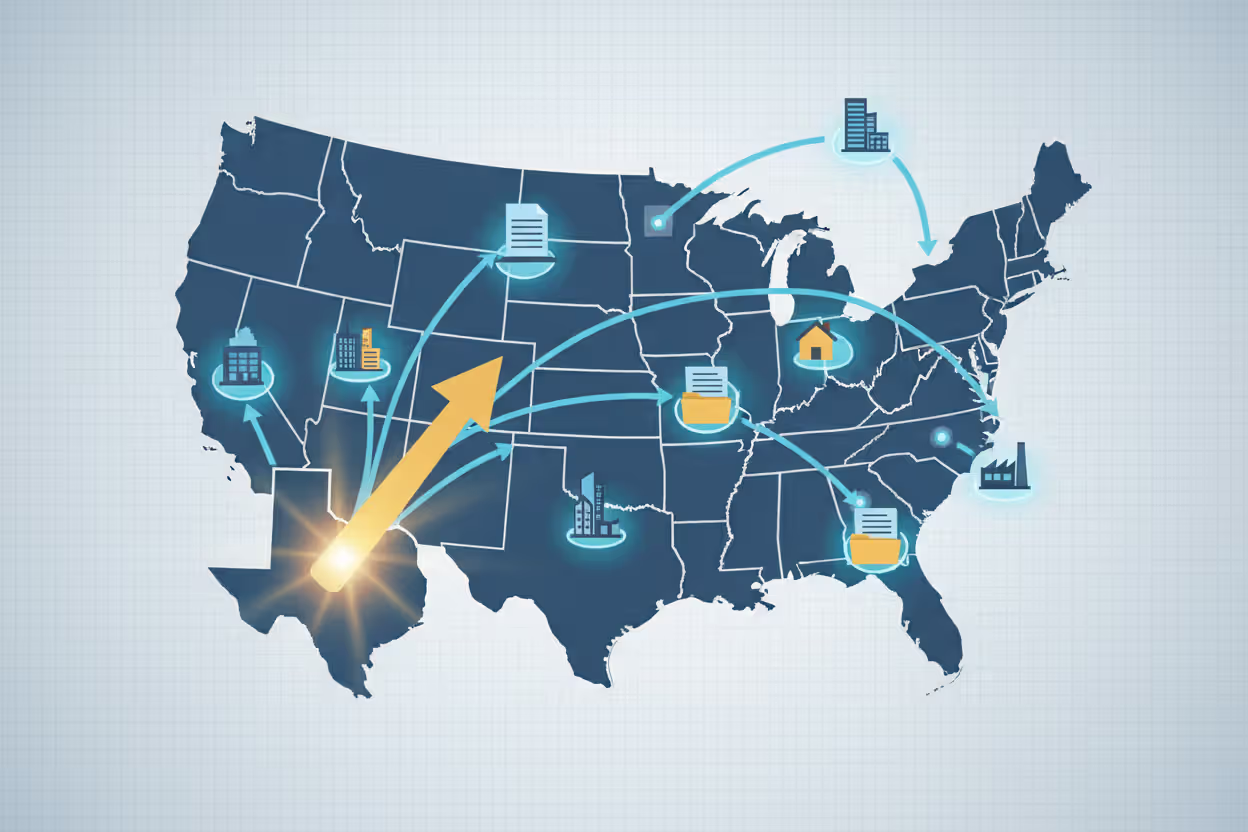
LLC relocation documents and U.S. map on office desk
How to Transfer LLC to Another State?

Relocating your LLC across state lines? It's not as simple as forwarding your mail. You're dealing with legal registration, tax jurisdictions, and compliance requirements that—if handled incorrectly—can cost you thousands in penalties or leave your business in legal limbo.
Here's the reality: you've got two completely different ways to handle this move. You can either pack up your LLC's entire legal existence and relocate it (called redomestication), or you can keep your original registration and add authorization to work in other states (foreign qualification). The path you choose affects everything from your annual fees to your tax bill to how much paperwork you'll shuffle every year.
Why Business Owners Move Their LLCs Across State Lines
Let's talk about what actually pushes people to relocate an LLC.
The simplest reason? You moved. If you started your business in Ohio but now you're running everything from an Arizona office with Arizona employees and Arizona customers, keeping that Ohio registration active means you're paying fees and filing reports for a state you've abandoned. That's money out the window.
Taxes get people's attention fast. California hits LLCs with an $800 yearly minimum tax even if you're losing money. Nevada? Zero income tax on LLCs. Wyoming? Same deal. A business pulling in $400,000 annually could pocket $12,000+ by switching from a high-tax state to a no-tax jurisdiction—though you'll need to verify the math works for your specific situation since other factors (like sales tax and local taxes) enter the equation.
Legal environment matters more than most owners realize initially. Delaware's Court of Chancery has spent 200+ years handling nothing but business disputes. That specialized expertise attracts companies expecting complicated litigation or preparing for acquisition. Meanwhile, Wyoming and Nevada have beefed up their charging order protections, making it harder for creditors to reach LLC assets—something real estate investors particularly value.
Sometimes your business simply shifts beneath you. Your customer base migrates to a new region. You hire employees in a different state. Your operations gradually concentrate somewhere other than where you originally formed. At that point, you're probably already required to foreign qualify in your operating state anyway, so maintaining your original registration becomes redundant.
Real estate investors relocate LLCs constantly. If you formed an LLC in your home state but bought rental properties in three other states, you'll need foreign qualification in each property state. Many investors find it cleaner to move the LLC to whichever state holds the bulk of their portfolio.
Author: Kevin Halbrook;
Source: worldwidemediums.net
Two Methods to Move Your LLC: Domestication vs. Foreign Qualification
The confusion starts with terminology. "Moving" your LLC can mean two entirely different legal actions with completely different consequences.
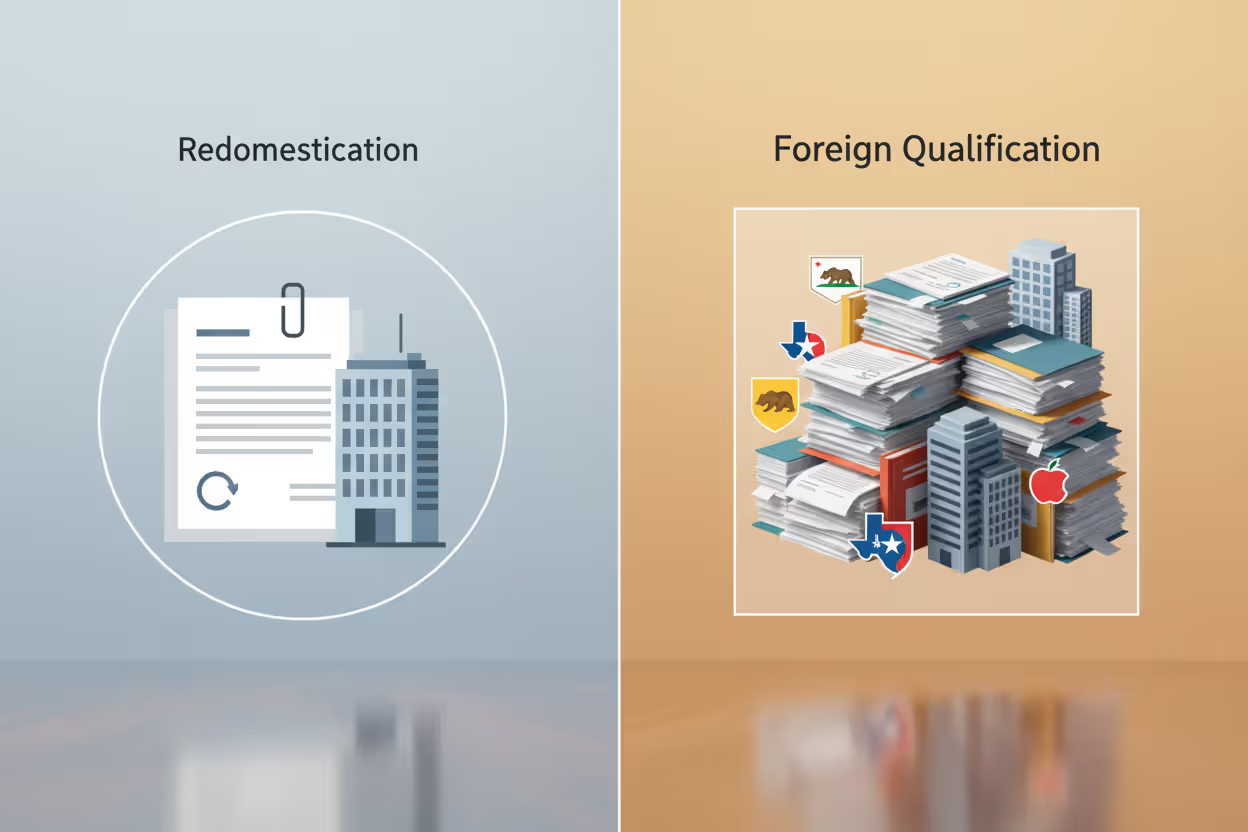
What Is LLC Redomestication
Redomestication (some states call it statutory conversion or domestication) actually transfers your LLC's legal home from State A to State B. Same company. Same formation date. Same EIN. Same contracts, bank accounts, assets, and history. The only change? Which state's Secretary of State has your registration paperwork.
Picture it like this: your LLC moves residences but stays the same person. You're not creating a new entity or transferring anything between entities—you're updating the legal address of record for the existing entity.
Both states have to play along. Your current state needs to permit outgoing domestication, and your target state must accept incoming domestication. About 35-40 states now allow this in some form, though each has quirky requirements. Montana makes you publish a newspaper notice. Some states require all members to vote yes. Others let you specify a different threshold in your operating agreement.
The paperwork hits both states. You'll file conversion or domestication certificates with both Secretaries of State, along with new formation documents in your destination state. Member approval comes first—often unanimous unless your operating agreement says otherwise. Processing runs anywhere from 5 business days to 8 weeks depending on which states you're dealing with and whether you pay extra for expedited service.
Once everything's approved, you terminate your original state registration. That kills the ongoing annual report requirements, franchise taxes, and registered agent fees in your old state. You'll establish a registered agent in your new home state and update your operating agreement to reference the new state's LLC statutes.
What Is Foreign Qualification
Foreign qualification means registering your LLC to do business in a state other than where you formed it. Your LLC stays a legal entity of its original state—you're just getting permission to operate elsewhere too.
Author: Kevin Halbrook;
Source: worldwidemediums.net
Let's say you formed your LLC in Delaware. You foreign qualify in Texas. Your company is still a Delaware LLC, governed by Delaware law for internal affairs. You keep your Delaware registered agent and file annual reports in Delaware. But now you also need a Texas registered agent, file Texas reports, and comply with Texas regulations for your Texas operations.
This approach works when you genuinely need to operate in multiple states but want to preserve your original state's legal framework. Plenty of companies form in Delaware for its business-friendly statutes and extensive case law, then foreign qualify in every state where they actually do business.
Foreign qualification doesn't relocate anything—it duplicates. You're paying fees and meeting compliance requirements in every jurisdiction where you're registered. For companies operating in four, five, six states? The administrative burden gets heavy fast, and the annual costs multiply across all those registrations.
Which Option Is Right for Your Business
Pick redomestication when you're truly leaving your original state behind. If you formed in Michigan, moved all your operations to Florida three years ago, serve only Florida customers, and haven't set foot in Michigan for business purposes since the move, redomestication eliminates unnecessary Michigan expenses permanently.
Go with foreign qualification when you need presence in several states simultaneously. A software company with offices in Colorado, developers in Oregon, and sales staff in Virginia might keep a Delaware formation (for its legal advantages) while foreign qualifying in all three operational states.
Run the numbers carefully. Redomestication costs $300-$800 in combined filing fees across both states, then you're down to single-state compliance costs forever after. Foreign qualification means perpetual fees everywhere you're registered—$200-$500 per state annually for reports and registered agents, plus franchise taxes where applicable. Over five years, multi-state foreign qualification can cost $5,000-$15,000 more than redomesticating to a single well-chosen state.
Tax consequences sometimes override everything else. A few states impose exit taxes when you domesticate out. California will absolutely scrutinize your past tax compliance before letting you withdraw. If you owe back taxes or missed filings, they'll surface during this process.
If your LLC carries significant debt, faces pending lawsuits, or has complicated ownership, talk to an attorney first. Creditors occasionally challenge domestications as fraudulent conveyances. Several states require you to notify creditors before domesticating, and some impose waiting periods to give creditors time to object.
Step-by-Step Process to Redomesticate Your LLC
The mechanics vary by state, but you'll follow this general sequence. Get the order wrong and you'll waste time, money, or both.
Step 1: Confirm both states permit domestication. Pull up your current state's LLC statutes and search for domestication or conversion provisions. Do the same for your target state. The Secretary of State websites usually clarify whether they accept domestication. New York only started allowing this recently and has restrictions. A few states still prohibit it entirely.
Step 2: Get member approval and document it properly. Check what your operating agreement says about major decisions. Most require unanimous member consent for domestication unless you've specified a lower percentage. Even if you're a single-member LLC, create a written consent resolution with your signature and date. This documentation protects you if anyone later questions the domestication's validity.
Step 3: Prepare your plan of domestication if required. Certain states want a formal plan document laying out the terms. This specifies your new state, confirms your LLC name (or notes any name change), explains how member interests are affected (usually not at all), and addresses operating agreement updates. Not every state requires this, but assembling it anyway creates a useful record.
Step 4: File formation documents in your new state. Submit articles of domestication, articles of conversion, or articles of organization (terminology varies wildly) to your new state's business filing office. Pay the filing fee—typically $100-$400 depending on the state. Delaware charges around $200. Nevada wants $350-$400. Wyoming comes in under $150.
Step 5: Get a certificate of good standing from your current state. Your new state will almost certainly require proof that you're current on all filings and obligations in your existing state. Request a certified certificate of good standing from your current state's Secretary of State. These cost $20-$75 and stay valid for 30-60 days usually, so don't get it too early. You'll submit this with your new-state filings.
Step 6: Notify your original state of the outgoing domestication. File articles of domestication, a certificate of conversion, or whatever your original state calls it to formally notify them you're leaving. Some states just need a letter. Others require specific forms and fees. This authorizes the transfer from their end.
Step 7: Appoint your new registered agent. You can't finalize domestication without a registered agent holding a physical street address in your new state. If you're using a service like Northwest Registered Agent or Harbor Compliance, they'll coordinate the switch. If you're serving as your own agent, you'll need to provide your physical address in the new state.

Author: Kevin Halbrook;
Source: worldwidemediums.net
Step 8: Wait for approval from both states. Processing times swing wildly. Nevada and Wyoming often approve within 3-7 business days. California can take 6-8 weeks. Texas averages 3-4 weeks. New York might drag on for 8-10 weeks. Expedited processing costs extra ($50-$500 per state) but can cut the timeline to 24-48 hours in states that offer it. Save every certificate and approval letter you receive.
Step 9: Close your registration in the original state. Once your new state confirms the domestication, file articles of withdrawal or dissolution with your original state. This formally terminates your registration there and stops the accumulation of annual report fees and franchise taxes. Skipping this step is shockingly common—people assume domestication automatically handles it, then years later discover they owe thousands in penalties for unfiled reports.
Step 10: Update federal and financial records. Send Form 8822-B to the IRS reporting your address change. Your EIN doesn't change, but the IRS needs your current location. Notify your bank—some require board resolutions or member consent documentation before updating your LLC's state of organization on accounts. Update business credit cards, lines of credit, and loan documents.
Step 11: Revise your operating agreement. Amend the agreement to reflect your new state of organization and specify that your new state's laws govern the agreement. If your original agreement referenced specific statutes from your old state, you'll need to update those. Some provisions that were valid in your old state might not be enforceable in your new one, so review carefully or have an attorney check it.
State Filing Requirements and Costs
Requirements for domestication swing dramatically depending on which states you're dealing with. Here's what to expect from states commonly involved in LLC transfers:
| State | Accepts Incoming Domestication | Allows Outgoing Domestication | Filing Fees (Approximate) | Typical Processing Time |
| Delaware | Yes | Yes | $200-$250 | 10-15 business days |
| Nevada | Yes | Yes | $350-$425 | 5-10 business days |
| Wyoming | Yes | Yes | $100-$150 | 5-10 business days |
| Florida | Yes | Yes | $125-$175 | 15-20 business days |
| Texas | Yes | Yes | $300-$350 | 15-25 business days |
| California | Yes | Yes (with scrutiny) | $150-$200 | 30-40 business days |
| New York | Limited/Recent | Limited/Recent | Varies | 30-60 business days |
| Montana | Yes | Yes | $70-$100 | 10-15 business days |
States that still prohibit or severely limit domestication include a handful of jurisdictions with outdated LLC statutes. In those cases, you'll need to form a brand new LLC in your desired state and transfer all assets to it—a messier process with different tax implications since you're creating a new legal entity.
Filing fees tell only part of the cost story. Registered agent services charge $100-$300 per year per state. Attorney review for domestication documents runs $500-$2,500 depending on how complex your situation is. Expedite fees add another $50-$500 per state if you need faster processing.
Ongoing costs in your new state matter too. California hits most LLCs with that infamous $800 yearly minimum franchise tax whether you made $1 or $1 million. Delaware's annual franchise tax lands at $300 for typical LLCs. Wyoming charges $60 annually. These recurring costs accumulate year after year, so a state that seems cheaper upfront might cost more over a decade.
Processing timelines become critical if you're racing a deadline. Trying to complete domestication by December 31 for tax-year purposes? Start in October at the latest, earlier if you're dealing with slow-processing states. Expedited options exist in most states—Delaware offers same-day processing for an extra fee, Nevada turns around expedited filings in 24 hours—but not every state provides this, and even expedited service means nothing if you haven't gathered all your prerequisite documents first.
Tax and Legal Considerations When Relocating an LLC
Tax implications need serious analysis before you file anything. The IRS generally treats redomestication as a non-taxable event at the federal level because your LLC maintains its legal identity and EIN. From the federal government's perspective, you're the same company with a new address, not a different entity.
State tax authorities view this differently depending on the state. Your original state might require a final tax return covering January through your domestication date. California has been known to launch audits during the withdrawal process, scrutinizing whether you've paid everything you owe before they let you leave. Some states impose exit fees or special assessments on departing companies.
Your destination state's tax obligations kick in from your domestication date forward. Some require a short-period return for the first year. Sales tax registration, franchise tax filing, income tax withholding for employees—all these shift to your new state's rules and rates. If you're moving from a high-tax state to a no-tax state, you'll see savings immediately on future income. But transition periods sometimes create exposure in both states if you're not careful about timing and documentation.
For members personally, tax treatment usually stays consistent. LLC members continue reporting their share of profits and losses on individual returns. However, state-level taxation can shift for members. If you live in State X and your LLC domesticates from State Y to State Z, your state filing requirements might change. Some states tax residents on LLC income regardless of where the LLC is located; others don't.
Your federal EIN stays with you through redomestication because the IRS considers you the same entity. You absolutely must file Form 8822-B with the IRS to report your business address change, though. State tax ID numbers typically do change—your new state issues a new state tax ID, which means updating that number with vendors, clients, payment processors, and anyone who reports payments to state authorities.
Switching registered agents isn't optional. You need someone with a physical street address in your new state to accept legal documents before you can finalize domestication. Your old registered agent should receive formal notice and a release once you've completed the transfer. If you're late canceling the old agent, you might get billed for another year.
Your operating agreement needs updates to reflect the new governing law. State LLC statutes differ on member rights, fiduciary duties, dissolution procedures, and dozens of other provisions. Your agreement should explicitly state which state's law controls and might need substantive changes to align with your new state's default rules. Nevada and Delaware have different rules about manager liability than California or New York, for instance.
Getting member and manager approval right matters more than people realize. Many states mandate unanimous member consent for domestication unless your operating agreement permits a lower threshold. Document every approval with signatures and dates. Even single-member LLCs should create written consent resolutions. This protects you if someone later disputes the domestication's validity or if you bring on new members who question past decisions.
Licenses and permits don't automatically follow you. Professional licenses, business operating permits, sales tax certificates, industry-specific authorizations—all these typically require fresh applications in your new state. A contractor's license in State A doesn't transfer to State B. An attorney licensed in State A has to separately qualify in State B. Budget both time and money for re-licensing, which for regulated professions sometimes involves new examinations or lengthy credential reviews.

Author: Kevin Halbrook;
Source: worldwidemediums.net
Common Mistakes to Avoid During LLC Transfer
Timing errors cause more failed domestications than any other mistake. People file domestication paperwork in their new state before securing good standing certificates from their old state—the new state rejects the filing. Others try withdrawing from their original state before their new state approves the domestication, creating a window where the LLC technically has no legal home. Follow the sequence precisely.
Here's a costly one: business owners complete the domestication but forget to formally withdraw from the original state. They assume filing the domestication automatically terminates the old registration. It doesn't. The LLC remains registered in both states. Fast forward three years—they're getting collection notices for unpaid annual report fees and penalties from a state they thought they left. I've seen accumulated penalties exceed $3,000 for this oversight.
Incomplete member approval documentation creates vulnerability. If one member later claims they didn't consent to the domestication, lack of proper written documentation can unravel the entire transfer or trigger expensive litigation. Even for single-member LLCs, create a written consent resolution. Future buyers or lenders will want to see that documentation.
Neglecting to update contracts and agreements after domestication causes confusion with customers and vendors. Your LLC's contracts remain legally valid—domestication doesn't terminate them. But counterparties need notification of your new state registration. Some contracts include clauses triggered by changes in domicile, potentially requiring consent or creating technical defaults. Review your major agreements for these provisions before proceeding.
Ignoring state-specific quirks derails otherwise proper domestications. Montana requires you to publish your domestication notice in a newspaper. Several states mandate creditor notification periods. A few impose waiting periods between filing and effective date. Missing these state-specific requirements can invalidate the transfer or expose you to creditor claims.
Tax filing confusion hits people who don't understand how domestication affects reporting obligations. You might owe a final return in your old state, a short-period return in your new state, and need to update quarterly estimated payments to the new jurisdiction. Missing these requirements triggers penalties and interest that compound quickly.
Assuming your EIN changes causes people to unnecessarily apply for new EINs. Then they've got two EINs for the same entity. The IRS receives tax returns under both numbers for the same company. This creates compliance nightmares, audit flags, and correspondence you don't want.
Choosing domestication when foreign qualification actually serves your needs better wastes money and creates problems. If you actually need to maintain business operations in your original state, domesticating away from it forces you to immediately foreign qualify back into it—you've now paid domestication fees in both directions and foreign qualification fees, achieving nothing except emptier bank accounts and confusion.
Business owners consistently underestimate what's involved in relocating an LLC. They assume it's straightforward and skip critical steps—failing to get proper member consent, forgetting to withdraw from the original state, or missing state-specific requirements like creditor notifications. Proper planning and understanding each state's unique requirements can save you thousands in penalties and legal fees. The most expensive mistake? Thinking this is simpler than it actually is
— Jennifer Morrison
Frequently Asked Questions About Transferring an LLC
Moving your LLC to a new state through redomestication gives you a clean transfer of your company's legal home without the headache of creating new entities or restructuring ownership. You'll need to navigate requirements in both your current and destination states, document member approvals properly, and coordinate your filings to avoid gaps where your LLC lacks valid registration anywhere.
Understanding the split between redomestication and foreign qualification determines whether you're on the right path. Companies genuinely relocating operations typically benefit from redomestication, while businesses maintaining legitimate operations across multiple states often need foreign qualification instead.
State-specific rules, tax consequences, and timing all complicate LLC transfers beyond simple paperwork submission. Give yourself adequate time for the process—60 days minimum is wise. Verify both states permit domestication before you start. Document every step with paper trails and save all approval certificates. The work you put in upfront saves you from compliance disasters and penalty notices down the road.
Whether you're chasing better tax treatment, following your operations to a new location, or seeking stronger liability protections, handling your LLC transfer methodically protects your company's legal standing and keeps you out of costly compliance trouble.
Related Stories
Read more

Read more




The content on this website is provided for general informational and educational purposes only. It is intended to explain concepts related to Limited Liability Companies (LLCs), including formation, management, taxation, compliance, and business structuring.
All information on this website, including articles, guides, templates, and examples, is presented for general educational purposes. LLC requirements and regulations may vary depending on individual circumstances, business activities, state laws, and jurisdiction.
This website does not provide legal, tax, or financial advice, and the information presented should not be used as a substitute for consultation with qualified legal, tax, or financial professionals.
The website and its authors are not responsible for any errors or omissions, or for any outcomes resulting from decisions made based on the information provided on this website.