

Series LLC business structure diagram with master entity and separate series in an office setting
Series LLC Structure Guide

A series LLC represents one of the most misunderstood business entity structures available to entrepreneurs and investors. While it offers compelling advantages for certain business models, the complexity and limited recognition across states make it unsuitable for many situations. Understanding how this structure operates, where it's recognized, and whether it matches your business needs requires careful examination of both legal mechanics and practical implications.
What Is a Series LLC?
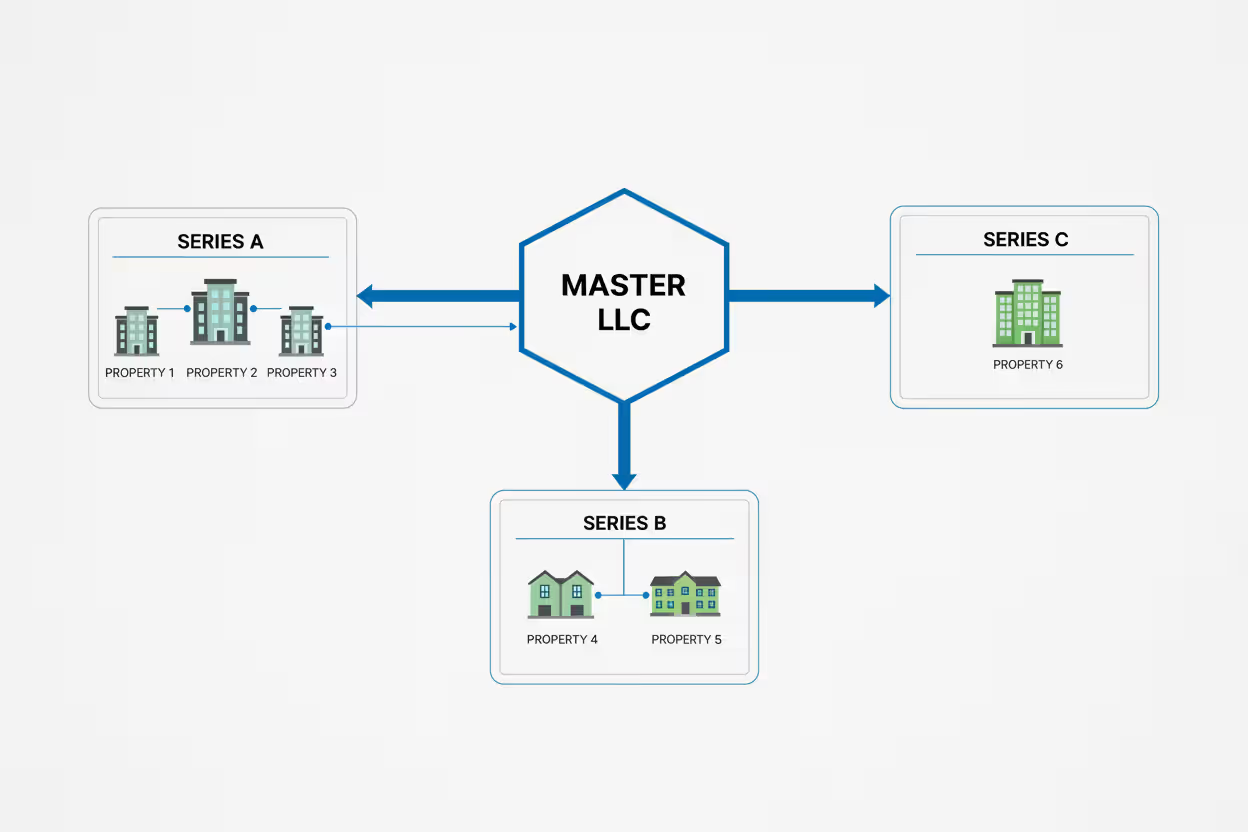
A series LLC is a specialized limited liability company that functions as an umbrella organization containing multiple separate divisions, called "series," under one master entity. Each series operates independently with its own assets, members, managers, and business purpose while remaining part of the parent LLC structure.
The master LLC serves as the foundational entity filed with the state. Once established, the operating agreement creates individual series without requiring separate state filings for each one. Each series can hold different assets, conduct distinct business activities, and maintain separate accounting records. The defining characteristic is that liabilities incurred by one series theoretically don't affect the assets held by other series within the same master LLC.
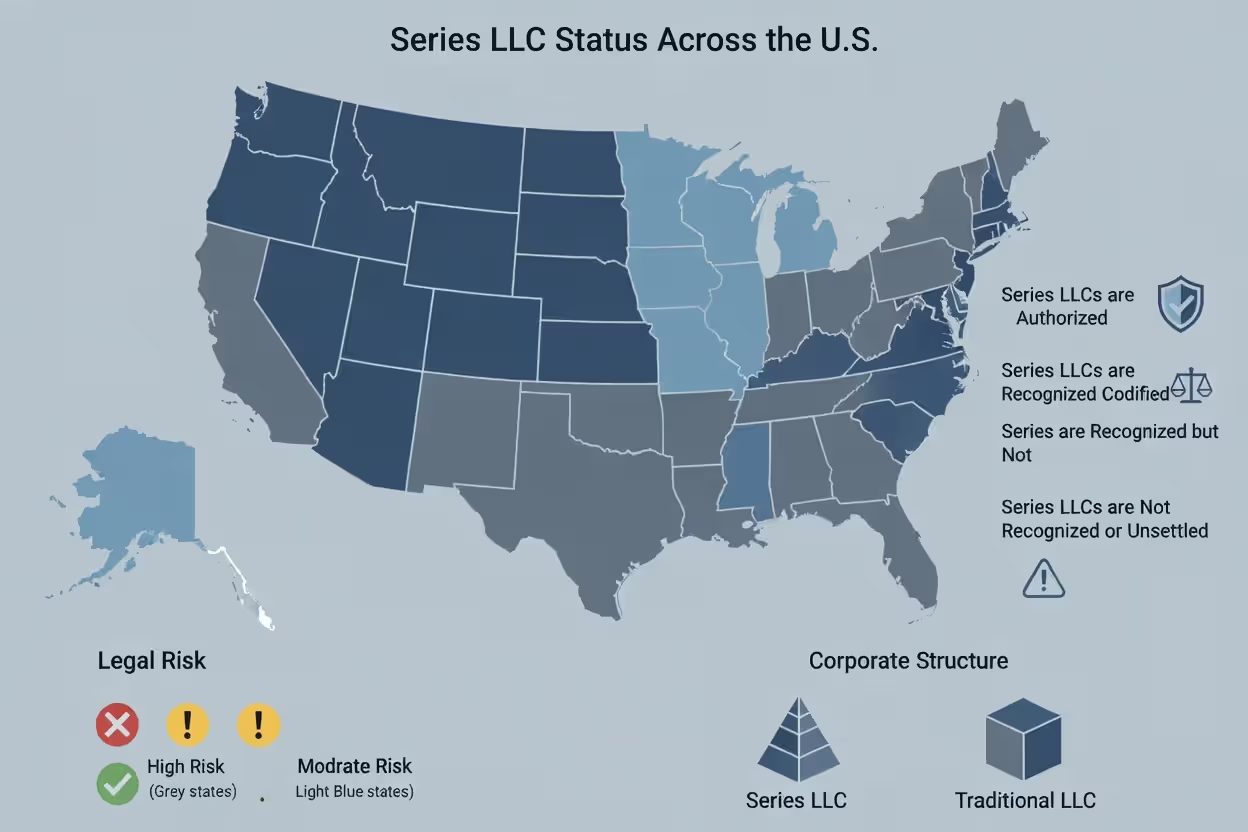
As of 2026, nineteen states and jurisdictions have enacted legislation authorizing series LLCs: Alabama, Delaware, Illinois, Indiana, Iowa, Kansas, Minnesota, Missouri, Montana, Nevada, North Dakota, Oklahoma, Tennessee, Texas, Utah, Wisconsin, Wyoming, Puerto Rico, and the District of Columbia. Delaware pioneered this structure in 1996, primarily for investment funds and asset management companies. Texas followed in 2009 with legislation specifically designed for real estate investors managing multiple properties.
Each state's statute varies significantly. Delaware's framework focuses on sophisticated business arrangements with minimal statutory requirements. Texas law includes more detailed provisions about maintaining separation between series. Illinois requires public filing of information about each series, while most other states allow series to remain private until they conduct business or enter contracts.
The lack of uniform adoption creates substantial complications. Courts in states without series LLC statutes have no obligation to recognize the liability separation between series, potentially treating the entire structure as a single entity. This jurisdictional uncertainty represents the most significant risk factor when considering this structure.
How the Series LLC Structure Works
Author: Olivia Carrington;
Source: worldwidemediums.net
The parent-child relationship in a series LLC differs fundamentally from typical corporate hierarchies. The master LLC doesn't "own" the individual series in the traditional sense. Instead, the operating agreement establishes each series as a protected cell within the larger organization, with contractual boundaries defining separation.
Asset segregation forms the core protective mechanism. Each series maintains separate bank accounts, books, and records. Assets titled in the name of a specific series belong exclusively to that series. For example, "ABC Master LLC, Series 1" would hold title to property designated for Series 1, while "ABC Master LLC, Series 2" would hold different assets. This naming convention signals to third parties which series they're dealing with, establishing the liability boundaries.
Liability protection between series functions through statutory firewalling. When properly maintained, debts and obligations of Series 1 cannot be satisfied from assets held by Series 2, Series 3, or the master LLC. A creditor with a judgment against Series 1 can only pursue assets specifically allocated to that series. This protection exists only within states that have enacted series LLC legislation and only when strict separation requirements are met.
Author: Olivia Carrington;
Source: worldwidemediums.net
Operational independence allows each series to function as a distinct business unit. Series 1 might lease commercial real estate, Series 2 could operate a consulting business, and Series 3 might hold investment securities—all under the same master LLC. Each series can have different members with varying ownership percentages, separate management structures, and unique operating rules defined in the master operating agreement.
The master LLC typically handles administrative functions: maintaining the registered agent, filing annual reports with the state, and ensuring compliance with formation state requirements. Individual series don't file separate formation documents in most states, though they must maintain documentation proving their establishment under the master operating agreement.
Critical to this structure is the concept of "adequate separation." Courts examining series LLC disputes focus on whether the business owner actually maintained distinct operations. Commingling funds between series, failing to maintain separate records, or not clearly identifying which series is entering contracts can destroy the liability protection, causing courts to disregard the series structure entirely.
How to Set Up a Series LLC
Forming a series LLC requires more upfront planning than establishing a traditional LLC, with strategic decisions that significantly impact long-term operations and legal protection.
Step 1: Choose Your Formation State
State selection determines which laws govern your series LLC, regardless of where you conduct business. Delaware offers the most developed case law and sophisticated statutory framework, making it attractive for complex investment structures or businesses planning eventual sale or fundraising. Texas provides clear statutes with detailed guidance on maintaining series separation, beneficial for real estate investors. Illinois requires more public disclosure but offers certainty through its filing requirements.
Consider where you'll actually operate. Forming in Delaware while conducting all business in California means registering as a foreign LLC in California, paying fees in both states, and facing potential challenges if California courts question the series structure. Some attorneys recommend forming in your home state if it has series LLC legislation to avoid foreign registration complications.
Step 2: File Articles of Organization
Submit formation documents to your chosen state's business filing office, typically the Secretary of State. The articles must explicitly state that the LLC is organized as a series LLC. Delaware requires only basic information and a statement that the LLC has series. Texas mandates specific language about liability limitations between series. Filing fees range from $100 to $500 depending on the state.
The master LLC receives a single certificate of formation. Individual series don't get separate certificates in most states, though Illinois requires a certificate of designation for each series, with additional filing fees.
Step 3: Create a Comprehensive Operating Agreement
The operating agreement represents the most critical document for a series LLC, far exceeding the importance of operating agreements for traditional LLCs. This document must establish the framework for creating series, define separation protocols, specify management authority, and outline procedures for forming new series.
Essential provisions include the process for establishing new series (typically by written consent of members or managers), naming conventions for series, requirements for separate accounting, rules about asset allocation, and procedures for dissolving individual series. The agreement should explicitly state that each series has separate assets and liabilities, and that no series is responsible for obligations of other series.
Many business owners make the mistake of using generic LLC operating agreement templates. Series LLC operating agreements require specialized drafting to ensure legal protection holds up under scrutiny. Budget $2,000 to $5,000 for attorney fees to draft this document properly.
Step 4: Establish Individual Series
Following procedures outlined in the operating agreement, formally establish each series through written documentation. Create a resolution or certificate of designation identifying the series name, business purpose, initial assets, members, managers, and operating rules specific to that series.
Open separate bank accounts for each series using the full legal name: "Master LLC Name, Series X." Financial institutions vary in their familiarity with series LLCs. Some banks refuse to open accounts for series, viewing them as unacceptable risk. Others require extensive documentation proving the series' authority to open accounts. Plan for potential challenges and be prepared to educate bank personnel or find alternative institutions experienced with series structures.
Obtain separate employer identification numbers (EINs) from the IRS for each series that will have employees, file separate tax returns, or operate as a disregarded entity for tax purposes. The IRS treats each series as a separate entity for tax purposes, even though state law may view them as divisions of a single entity.
Step 5: Maintain Ongoing Compliance
Annual compliance requirements include filing reports with the formation state for the master LLC, maintaining registered agent service, and keeping current with state fees. The master LLC typically files one annual report covering all series, though requirements vary by state.
More importantly, maintain rigorous separation between series. Never commingle funds by transferring money between series bank accounts without proper documentation and arm's-length terms. Keep separate books and records for each series. Ensure contracts clearly identify which series is entering the agreement. File separate tax returns for each series. Maintain separate insurance policies when possible.
Document everything. If a creditor later challenges the series structure, you'll need evidence proving you treated each series as truly separate. Keep formation documents, meeting minutes, financial records, contracts, and correspondence organized by series.

Author: Olivia Carrington;
Source: worldwidemediums.net
Series LLC Structure Examples by Industry
Real-world applications demonstrate both the power and limitations of series LLC structures across different business contexts.
Real Estate Series LLC Example
A real estate investor owns six rental properties across two states. Rather than forming six separate LLCs at $500 each plus $300 annual fees per entity—totaling $3,000 in formation costs and $1,800 annually—she forms a single Delaware series LLC for $300 with six series, one per property.
The master LLC, "Riverside Property Holdings LLC," establishes Series A through Series F. Each series holds title to one property: Series A owns the duplex on Maple Street, Series B owns the fourplex on Oak Avenue, and so forth. Each property has its own bank account receiving rental income and paying property-specific expenses.
When a tenant at the Maple Street property sues for alleged injuries, the lawsuit targets only "Riverside Property Holdings LLC, Series A." If the plaintiff wins a judgment, only the Maple Street property and funds in the Series A bank account are at risk. The other five properties remain protected.
This structure saves formation costs and reduces administrative burden compared to six separate LLCs. However, complications arise when she obtains financing. Most mortgage lenders refuse to lend to individual series within a series LLC, viewing the structure as legally uncertain. She must either obtain portfolio financing at less favorable terms or place properties in traditional LLCs.
Additionally, when she tries to sell the Oak Avenue property, the title company raises concerns about insuring title held by a series rather than a traditional entity. After consultation with attorneys, the buyer insists on purchasing through a traditional LLC structure, requiring her to transfer the property out of the series before closing.
Multi-Product Business Example
A consumer products company manufactures three distinct product lines: kitchen gadgets, outdoor tools, and pet accessories. Each line has different liability profiles. The outdoor tools face higher risk from potential injury claims, while kitchen gadgets have complex regulatory requirements.
The company forms "Innovate Products LLC" as a Delaware series LLC with three series. Series 1 handles kitchen gadgets, Series 2 manages outdoor tools, and Series 3 operates the pet accessories line. Each series has separate inventory, supplier contracts, customer agreements, and insurance policies.
When a defective outdoor tool causes injury, the resulting lawsuit and settlement affect only Series 2. The assets and operations of Series 1 and Series 3 remain unaffected, protecting the profitable kitchen gadget line from the outdoor tools liability.
The company maintains separate product liability insurance for each series with coverage limits matching each line's risk profile. Series 2 carries $5 million in coverage while Series 1 and Series 3 carry $2 million each, optimizing insurance costs.
Challenges emerge when the company seeks venture capital funding. Investors express concern about the series structure's complexity and limited case law. The company ultimately converts to a traditional LLC with wholly-owned subsidiary LLCs for each product line to complete the funding round, demonstrating how series LLCs can complicate capital formation.

Author: Olivia Carrington;
Source: worldwidemediums.net
Advantages and Disadvantages of the Series LLC Structure
Understanding the trade-offs helps determine whether this structure matches your specific circumstances.
Advantages:
Cost savings represent the most obvious benefit. Forming one master LLC with multiple series costs significantly less than establishing separate LLCs for each business line or asset. One filing fee, one registered agent, one annual report, and one operating agreement (though more complex) reduce both initial and ongoing expenses.
Liability protection, when properly maintained, shields each series from the debts and obligations of other series. This internal liability barrier provides similar protection to forming separate LLCs without the multiplicative costs.
Administrative flexibility allows easier creation of new series compared to forming new LLCs. Once the master LLC exists, establishing additional series requires only internal documentation following operating agreement procedures, not state filings and fees.
Centralized management simplifies oversight when one person or team manages multiple related ventures. The master LLC framework provides unified control while maintaining legal separation between business units.
Disadvantages:
Limited state recognition creates the most significant practical problem. Only nineteen jurisdictions have series LLC statutes. Courts in the remaining states may refuse to recognize liability separation between series, potentially treating the entire structure as one entity. If you conduct business nationwide, this uncertainty undermines the primary benefit.
Banking challenges frustrate many series LLC owners. Financial institutions often lack familiarity with the structure, refuse to open accounts for individual series, or impose additional requirements and fees. Obtaining loans secured by series assets proves particularly difficult, with many lenders refusing to accept series as borrowers.
Tax complexity increases compared to traditional LLCs. Each series typically files separate tax returns, multiplying preparation costs and compliance requirements. The IRS provides limited guidance on series LLC taxation, creating uncertainty about proper treatment of transactions between series or allocations from the master LLC.
Legal uncertainty pervades the series LLC landscape. Few court decisions examine series LLC disputes, leaving open questions about when courts will respect series separation. Bankruptcy courts particularly struggle with series LLCs, with unresolved questions about whether bankruptcy of one series affects others or whether the entire master LLC enters bankruptcy.
Professional skepticism creates practical obstacles. Attorneys, accountants, insurance brokers, and other professionals unfamiliar with series LLCs may advise against them or charge premium fees for services. Title companies often refuse to insure property held by series. Business partners or investors may resist the structure's complexity.
Series LLC vs Traditional LLC vs Multiple LLCs
Direct comparison clarifies the practical differences between entity structure options:
| Feature | Series LLC | Traditional LLC | Multiple LLCs |
| Initial Formation Cost | $100-$500 (one filing) | $100-$500 (one filing) | $100-$500 per entity |
| Annual Maintenance Cost | $100-$500 (one report) | $100-$500 (one report) | $100-$500 per entity |
| Liability Protection Level | High between series (if properly maintained and in states recognizing structure) | High from owner's personal assets | High between separate entities |
| Administrative Complexity | High (must maintain strict separation, complex operating agreement, separate records per series) | Low (single set of records, straightforward operations) | Medium to High (multiple entities to manage but simpler individual operations) |
| State Recognition | 19 states/jurisdictions only | All 50 states and territories | All 50 states and territories |
| Best Use Case | Multiple related ventures in states recognizing series LLCs; situations where cost savings justify complexity | Single business or property; operations in multiple states; simplicity priority | Completely separate businesses; operations in non-series states; maximum liability protection |
The choice depends on your specific situation. A real estate investor with ten properties in Texas might benefit from a series LLC given Texas's clear statutes and cost savings. A consultant operating in multiple states should choose a traditional LLC for simplicity and universal recognition. An entrepreneur with three unrelated businesses might prefer separate LLCs for maximum protection and operational clarity.
Consider the total cost over five years. Three separate LLCs in Nevada cost approximately $2,100 to form ($700 × 3) and $2,025 annually ($675 × 3), totaling $12,225 over five years. A Nevada series LLC with three series costs approximately $425 to form and $425 annually, totaling $2,525 over five years—a savings of $9,700. However, this calculation ignores increased accounting fees, potential legal costs addressing complications, and banking challenges that may eliminate savings.
Common Mistakes When Forming a Series LLC
Avoiding these errors preserves the liability protection and benefits that make series LLCs attractive:
Failing to Maintain Adequate Separation
The most common and dangerous mistake involves treating series as mere accounting categories rather than legally distinct entities. Transferring funds between series without documentation, paying expenses of one series from another series' account, or using a single bank account for multiple series destroys the liability barrier. Courts examining series LLC disputes focus heavily on whether owners actually maintained separation. Commingling funds provides grounds for courts to disregard the series structure entirely, eliminating liability protection.
Inadequate Recordkeeping
Series LLCs demand meticulous records. Each series needs separate financial statements, transaction records, contracts, and meeting minutes. Many owners maintain records for the master LLC but fail to document activities at the series level. When disputes arise years later, the inability to produce records showing proper separation undermines legal protection. Implement systems from day one: separate accounting software files, organized document storage by series, and regular reviews ensuring compliance.
Choosing the Wrong Formation State
Forming a series LLC in Delaware because "everyone forms in Delaware" makes sense for sophisticated investment funds but creates problems for small businesses operating entirely in Illinois. You'll pay fees in both states, comply with two sets of regulations, and potentially face challenges when Illinois courts apply Delaware law. If your home state has series LLC legislation and you operate primarily there, form in your home state. Choose Delaware only when specific benefits justify the additional complexity.
Assuming Nationwide Recognition
Business owners sometimes believe that forming a series LLC in Delaware provides liability protection everywhere. This assumption proves dangerously wrong. A creditor obtaining a judgment in California against a Delaware series LLC may convince California courts to ignore the series separation, treating all assets as available to satisfy the judgment. Before forming a series LLC, identify every state where you'll conduct business and research whether those states recognize series LLCs. If you operate significantly in non-recognition states, reconsider the structure.
Not Identifying Series in Contracts
Contracts that name only the master LLC without specifying the series create ambiguity about which series is liable. Always use the full legal name: "ABC Master LLC, Series 2" rather than just "ABC Master LLC." This identification puts third parties on notice about which assets back the obligation and which series they can pursue for breach. Ambiguous contracts may allow creditors to argue that all series are liable, defeating the protective structure.
Skipping Professional Guidance
Series LLCs involve complex legal and tax issues that exceed the scope of online formation services or generic legal documents. The operating agreement requires specialized drafting. Tax treatment involves nuanced analysis. State law variations demand careful attention. Attempting to save money by forming a series LLC without attorney and accountant guidance often costs far more when problems emerge. Budget for professional fees as part of the formation cost, not an optional expense.
The series LLC structure makes sense for a narrow range of situations, primarily real estate investors with multiple properties in states with well-developed series LLC statutes like Texas or Delaware.The cost savings are real if you're comparing against forming ten separate LLCs. However, most of my clients ultimately choose traditional structures because the banking challenges, tax complexity, and legal uncertainty outweigh the savings. If you operate in multiple states, particularly states without series LLC legislation, the risks increase substantially. Before forming a series LLC, I recommend modeling the total five-year costs including professional fees, considering where you'll actually conduct business, and honestly assessing whether you'll maintain the rigorous separation required. For many businesses, the simplicity and universal recognition of traditional LLCs or separate entities justify the additional cost
— Jennifer Martinez
Frequently Asked Questions About Series LLC Structure
The series LLC structure offers a specialized solution for specific business situations, particularly real estate investors and companies managing multiple related ventures in states with clear series LLC legislation. The potential for cost savings and streamlined administration attracts entrepreneurs looking to minimize formation and maintenance expenses while maintaining liability protection between business units.
However, the structure's limited recognition across states, banking and financing challenges, tax complexity, and legal uncertainty make it unsuitable for many situations. The rigorous separation requirements demand meticulous recordkeeping and operational discipline that many business owners find burdensome. Professional skepticism from attorneys, accountants, lenders, and title companies creates practical obstacles that can eliminate theoretical benefits.
Before forming a series LLC, carefully analyze where you'll conduct business, whether those states recognize the structure, your ability to maintain strict separation between series, and the total costs including professional fees over several years. Compare these factors against alternatives: a traditional LLC for single ventures, or separate LLCs when maximum protection and universal recognition justify additional costs.
The series LLC represents a powerful tool when properly deployed in appropriate circumstances. It also represents a complex structure with significant pitfalls when misapplied. Professional guidance from attorneys and accountants experienced with series LLCs proves essential, not optional, for anyone seriously considering this entity structure. The money saved on formation fees becomes irrelevant if inadequate separation or legal challenges in non-recognition states destroy the liability protection you sought to create.
Related Stories

Read more

Read more




The content on this website is provided for general informational and educational purposes only. It is intended to explain concepts related to Limited Liability Companies (LLCs), including formation, management, taxation, compliance, and business structuring.
All information on this website, including articles, guides, templates, and examples, is presented for general educational purposes. LLC requirements and regulations may vary depending on individual circumstances, business activities, state laws, and jurisdiction.
This website does not provide legal, tax, or financial advice, and the information presented should not be used as a substitute for consultation with qualified legal, tax, or financial professionals.
The website and its authors are not responsible for any errors or omissions, or for any outcomes resulting from decisions made based on the information provided on this website.