

Business holding company LLC structure with parent and subsidiary entities
How to Structure a Holding Company LLC?

Business owners who manage multiple properties or ventures often struggle with exposure to risk. A single lawsuit against one property can threaten an entire portfolio if everything sits under one roof. Structuring a holding company LLC creates legal separation between assets, shielding each piece from liabilities generated by the others.
This guide explains how holding company structures work, walks through formation mechanics, and highlights common pitfalls that can undermine protection.
What Is a Holding Company LLC
A holding company LLC exists to own other business entities rather than conduct day-to-day operations. Its primary function is holding equity interests in subsidiary companies—often called operating companies—that handle customer transactions, manage properties, or run active businesses.
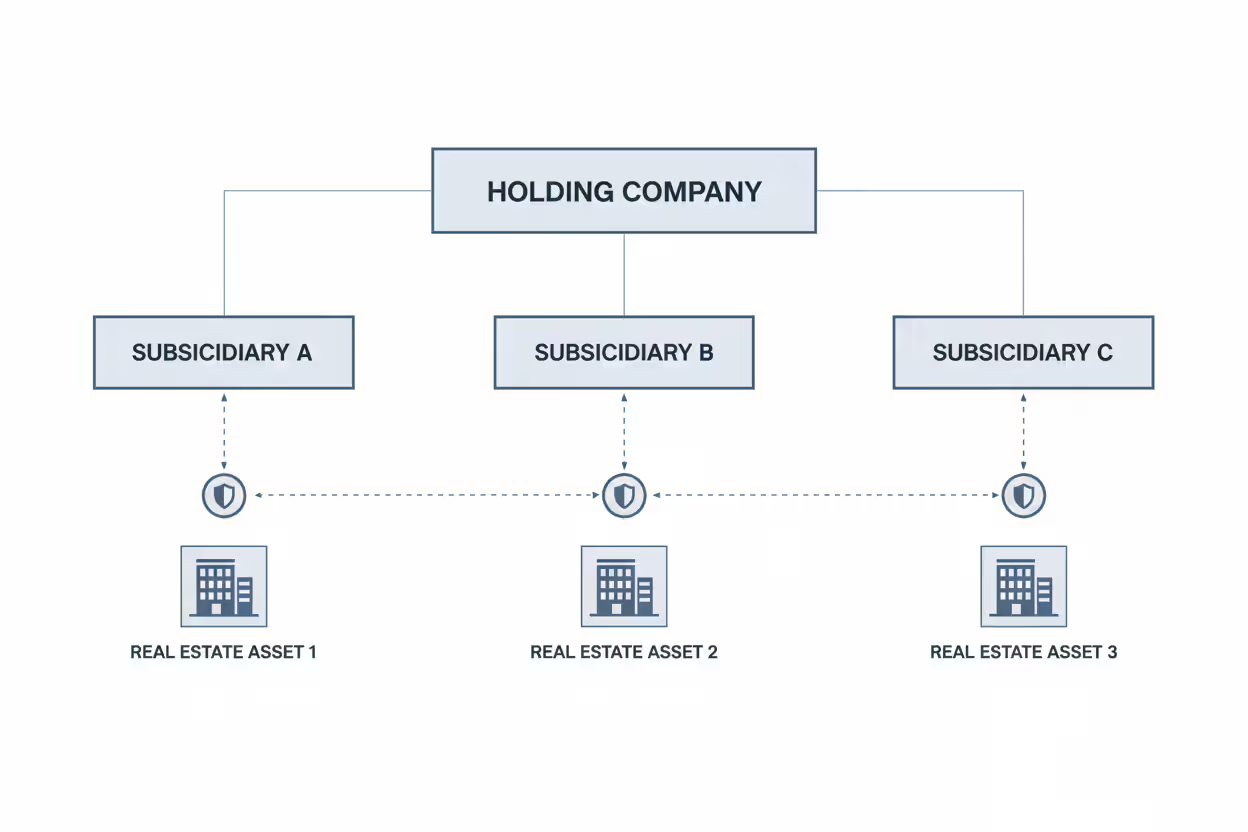
The parent-subsidiary relationship works like this: the holding company owns membership interests in one or more subsidiary LLCs. Each subsidiary operates independently, generating revenue and managing its own liabilities. The holding company collects distributions from profitable subsidiaries but maintains distance from operational risks.
This differs sharply from an operating company that signs contracts, employs workers, and interacts directly with customers. Operating companies face lawsuits from slip-and-fall incidents, contract disputes, or employee claims. A holding company stays removed from these exposures because it doesn't engage in activities that trigger liability.
For example, a real estate investor might form a holding LLC that owns three subsidiary LLCs—one for each rental property. Tenants interact only with the subsidiary that owns their building. If a tenant sues over mold in Property A, the judgment can only reach assets held by that property's subsidiary, not the other two properties or the holding company itself.
Author: Daniel Whitlock;
Source: worldwidemediums.net
Can One LLC Own Another LLC
Yes. Federal law and all 50 states permit LLC ownership of another LLC. An LLC can serve as the sole member of a subsidiary LLC or share ownership with other members.
The parent LLC structure mechanics are straightforward. When forming the subsidiary, the holding company is listed as a member in the articles of organization filed with the state. The operating agreement for the subsidiary identifies the holding company as an owner and specifies its ownership percentage.
Single-member subsidiaries—where the holding company is the only owner—offer simplicity. The holding company controls all decisions for the subsidiary. Multi-member subsidiaries involve shared ownership, requiring clear operating agreements that define voting rights, profit distribution, and management authority among the holding company and any co-owners.
State-specific regulations rarely prohibit this arrangement, but formation requirements vary. Delaware, Wyoming, and Nevada have streamlined processes and business-friendly statutes that make them popular for holding companies. Some states impose higher fees or franchise taxes that increase costs for multi-entity structures. California, for instance, charges an $800 annual minimum tax per LLC, making it expensive to maintain multiple entities there.
Registered agent requirements also matter. Each LLC—both parent and subsidiary—must maintain a registered agent in its state of formation. If your holding company is formed in Delaware but your subsidiaries operate in Texas, you'll need registered agents in both states.
Benefits of LLC Ownership of Another LLC
Structuring ownership through a parent-subsidiary arrangement delivers several advantages that single-entity structures cannot match.
Asset protection and liability separation stand out as the primary benefit. Each subsidiary operates as a distinct legal entity with its own liabilities. Creditors of one subsidiary cannot reach assets held by sister subsidiaries or the parent holding company, assuming corporate formalities are maintained. This firewall effect protects your portfolio from catastrophic loss.
A properly structured holding company acts as a firewall, ensuring that liabilities in one subsidiary don't threaten assets held in another.But that protection evaporates if you commingle funds or ignore formalities
— Michael Brennan
Tax advantages and flexibility emerge from pass-through taxation combined with strategic income allocation. LLCs taxed as partnerships or disregarded entities allow income to flow through to the holding company, then to individual owners, without double taxation. You can also elect S-corp or C-corp taxation for specific subsidiaries when it makes sense for employment tax savings or retained earnings strategies.
Estate planning benefits simplify wealth transfer. Instead of transferring multiple properties or business interests individually, you transfer ownership interests in the holding company. This reduces transfer taxes in some states and streamlines probate. Gifting partial interests in the holding company to heirs allows gradual wealth transfer while you maintain control through voting agreements.
Simplified management structure means you can centralize decision-making. The holding company appoints managers for each subsidiary, sets strategic direction, and monitors performance without getting tangled in daily operations. This separation becomes valuable as your portfolio grows beyond what one person can directly manage.

Author: Daniel Whitlock;
Source: worldwidemediums.net
How to Set Up a Real Estate Holding LLC
Formation follows a specific sequence to ensure proper structure and protection.
Step one: Choose your holding company's formation state. Delaware offers strong legal precedent and flexible LLC statutes. Wyoming provides privacy protections and no state income tax. Nevada eliminates corporate income tax and offers charging order protections. Your home state might make sense if you're keeping everything local and want to avoid foreign qualification fees.
Step two: File articles of organization with your chosen state's business filing office. Include the holding company's name (which must be distinguishable from existing entities), registered agent information, and management structure. Pay filing fees, which range from $50 in Kentucky to $500 in Massachusetts.
Step three: Obtain an Employer Identification Number (EIN) from the IRS, even if the holding company won't have employees. You need this for banking and tax purposes.
Step four: Draft a comprehensive operating agreement for the holding company. This internal document defines ownership percentages, management authority, distribution rules, and procedures for admitting new members or dissolving the company. Many states don't require filing this document, but it's essential for establishing how the entity operates.
Step five: Form subsidiary LLCs in the states where they'll operate. List the holding company as a member in each subsidiary's formation documents. Each subsidiary needs its own EIN, operating agreement, and registered agent.
Step six: Open separate bank accounts for the holding company and each subsidiary. Never commingle funds between entities—doing so pierces the liability protection you created.
Step seven: Transfer property to the appropriate subsidiary. For real estate, this means executing and recording deeds that convey title from your personal name (or existing entity) to the subsidiary LLC. Notify mortgage lenders before transferring mortgaged properties, as transfers can trigger due-on-sale clauses. Many lenders will consent if the same individuals guarantee the loan.

Author: Daniel Whitlock;
Source: worldwidemediums.net
Costs and Fees to Expect
Formation costs vary significantly by state and structure complexity. Budget $100–$500 per LLC for state filing fees. Registered agent services run $50–$300 annually per entity. Attorney fees for drafting operating agreements and handling property transfers typically range from $1,500–$5,000 depending on complexity and location.
Annual maintenance includes state filing fees (ranging from $0 in Ohio to $800 in California), registered agent renewals, and accounting costs for separate tax returns if required. A holding company with three subsidiaries might cost $2,000–$6,000 annually to maintain, depending on state fees and professional service costs.
Common Holding LLC Structures
Different arrangements suit different needs. The right structure depends on your number of assets, risk profile, and management preferences.
Single holding company with multiple subsidiaries is the most common approach. The parent LLC owns 100% of several subsidiary LLCs, each operating independently. This works well for real estate investors with multiple properties or business owners with separate ventures. Each subsidiary maintains its own operations, contracts, and bank accounts while the holding company provides oversight and collects distributions.
Series LLC alternative is available in about a dozen states including Delaware, Illinois, and Texas. A series LLC creates separate "series" within one LLC, each with distinct assets, members, and liabilities. Each series functions like a subsidiary but exists within a single legal entity, reducing formation and maintenance costs. However, series LLCs face uncertain treatment in bankruptcy and across state lines, making them riskier for high-value assets.
Tiered holding company arrangements add layers for additional protection. A master holding company owns subsidiary holding companies, which in turn own operating LLCs. This structure suits large portfolios or situations where you want to group related assets. For example, a master holding company might own separate holding companies for residential real estate, commercial real estate, and operating businesses, with each of those holding companies owning multiple property-specific LLCs.
| Structure Type | Complexity Level | Formation Cost | Annual Maintenance | Liability Protection | Best Use Case |
| Single Holding + Multiple Subsidiaries | Moderate | $500–$2,000 | $1,000–$4,000 | Strong (if formalities maintained) | 3–10 properties or businesses needing clear separation |
| Series LLC | Low to Moderate | $300–$800 | $400–$1,200 | Uncertain in some contexts | Cost-conscious investors in series-friendly states with moderate risk tolerance |
| Tiered Holding Structure | High | $1,500–$5,000 | $3,000–$10,000+ | Very Strong | Large portfolios (10+ assets) or complex business groups requiring layered protection |
Mistakes to Avoid When Creating a Holding Company LLC
Even properly structured holding companies fail to protect assets when owners make these errors.
Failing to maintain corporate formalities is the fastest way to lose liability protection. Courts can "pierce the corporate veil" and hold owners personally liable when entities aren't treated as separate. Hold annual meetings (or document unanimous written consents), keep minutes, and maintain separate records for each entity. These formalities prove that your subsidiaries are genuine separate entities, not just paper shields.
Inadequate
occurs when subsidiaries lack sufficient assets or insurance to cover foreseeable risks. If you transfer a rental property to a subsidiary LLC but provide no operating capital and carry no insurance, courts may disregard the entity as a sham. Each subsidiary should maintain reasonable insurance coverage and sufficient funds to handle normal operating expenses.
Commingling funds between entities destroys the separation you created. Don't pay a subsidiary's expense from the holding company's account, or vice versa. Don't deposit rental income from Property A's subsidiary into Property B's account. Every entity needs its own bank account, and every transaction must flow through the correct account. If you need to move money between entities, document it as a loan or distribution with proper paperwork.

Author: Daniel Whitlock;
Source: worldwidemediums.net
Not updating operating agreements leaves you vulnerable when circumstances change. If you add a new subsidiary, update the holding company's records to reflect the new ownership. If you bring in a partner, amend operating agreements to define the new member's rights. Outdated documents create confusion and can lead to disputes that undermine your structure.
Also avoid these specific pitfalls: signing contracts in your personal name instead of as manager of the LLC, using personal credit cards for business expenses, and failing to identify which entity you're acting for in correspondence and transactions. Every action should clearly indicate which LLC is acting.
FAQ
A holding company LLC provides a proven framework for protecting multiple assets through legal separation. By isolating liabilities within individual subsidiaries while centralizing ownership and control at the parent level, this structure shields your portfolio from risks that could otherwise threaten everything you've built.
The key to success lies in proper formation, meticulous maintenance of corporate formalities, and strict separation between entities. Choose your formation states carefully, maintain separate finances for each LLC, and document all inter-company transactions. The upfront cost and ongoing administrative burden pay dividends when a lawsuit or creditor claim hits one subsidiary but can't reach your other assets.
Whether you're managing a growing real estate portfolio or operating multiple business ventures, a well-structured holding company arrangement scales with your needs while providing the liability protection that single-entity structures cannot deliver. Work with qualified attorneys and accountants familiar with multi-entity structures to ensure your specific situation receives appropriate planning and documentation.
Related Stories

Read more

Read more




The content on this website is provided for general informational and educational purposes only. It is intended to explain concepts related to Limited Liability Companies (LLCs), including formation, management, taxation, compliance, and business structuring.
All information on this website, including articles, guides, templates, and examples, is presented for general educational purposes. LLC requirements and regulations may vary depending on individual circumstances, business activities, state laws, and jurisdiction.
This website does not provide legal, tax, or financial advice, and the information presented should not be used as a substitute for consultation with qualified legal, tax, or financial professionals.
The website and its authors are not responsible for any errors or omissions, or for any outcomes resulting from decisions made based on the information provided on this website.