

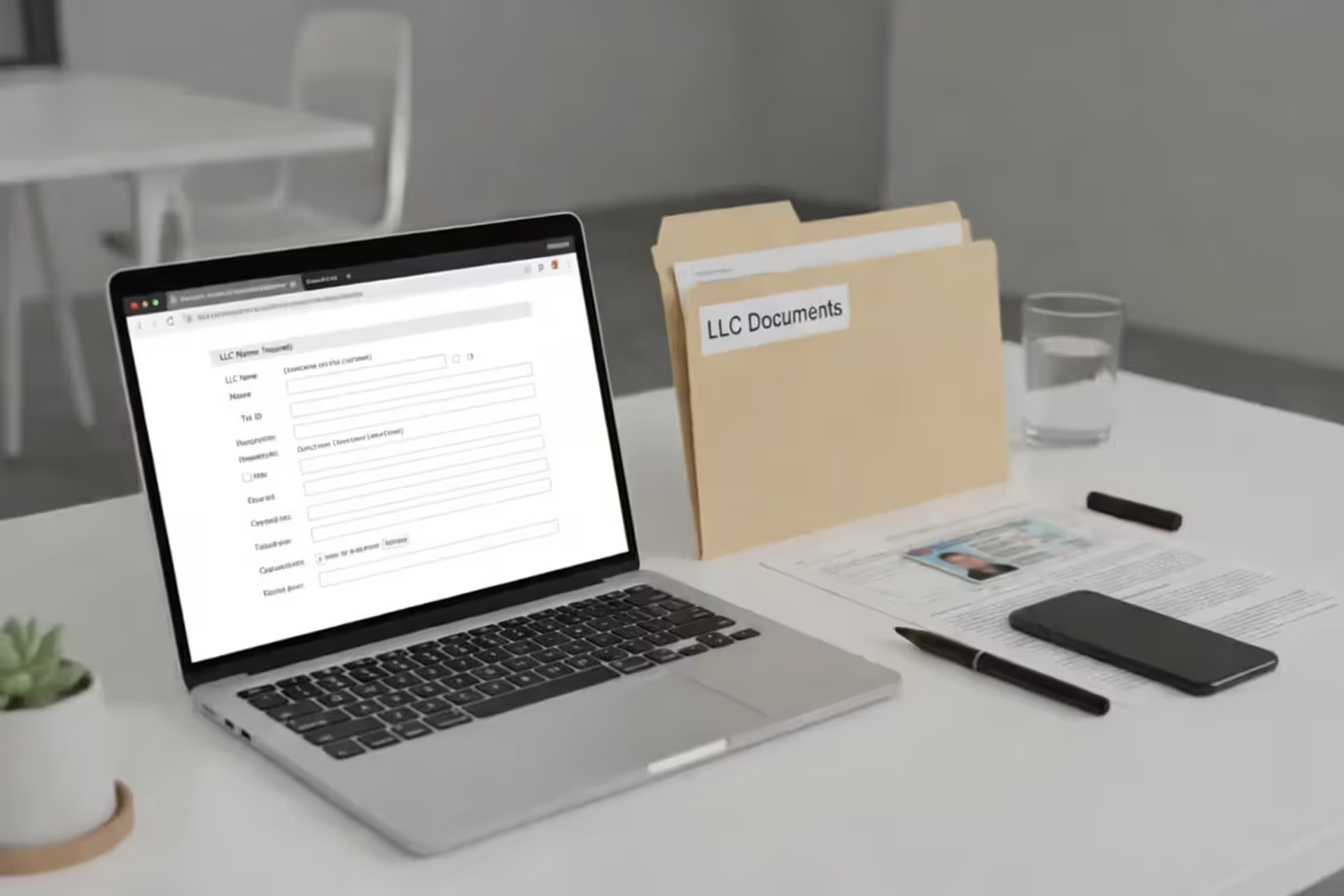
Business owner reviewing LLC amendment documents at office desk
Certificate of Amendment LLC Guide

Your company isn't the same as it was at launch. Maybe you've rebranded, relocated, or restructured how decisions get made. When these shifts happen, your state paperwork needs updating—that's where amendment certificates come in.
Here's what catches most LLC owners off guard: they'll change something significant, operate for months under new details, then discover their bank won't process a loan because state records don't match. Or worse, they miss a lawsuit notification sent to an outdated address. That $50 form they skipped filing? It just became a $50,000 problem.
What Is a Certificate of Amendment for an LLC?
When you first launched your LLC, you submitted formation paperwork—called articles of organization in some states, certificate of formation in others. That initial filing established your company's core identity: what you're called, where you operate, who accepts legal mail on your behalf, and how the business runs.
A certificate of amendment llc updates those core facts officially. It's not an internal memo or a note in your operating agreement. This document goes to the same state office that approved your original formation, updating the public record that defines your company legally.
Think about how birth certificates work. Your original articles function like a birth certificate for your business. An llc amendment document is like getting a legal name change or updated address on that certificate—it modifies the official government record.
Why does this matter? Banks pull your state filings when opening accounts. Courts reference them during lawsuits. Vendors check them before extending credit. When your filed information doesn't match reality, you'll hit walls trying to conduct basic business operations.

Author: Daniel Whitlock;
Source: worldwidemediums.net
Different states use different names for essentially the same form. California calls it a "Certificate of Amendment." New York uses "Articles of Amendment." Texas might refer to it as "Amendment to Certificate of Formation." Despite varying titles, they all accomplish the same thing: officially changing what's on file with your state.
Here's what separates amendments from other LLC paperwork: amendments modify your public state record, while internal documents like operating agreements or member resolutions stay private. Both matter, but only amendments change what the government and public can see about your company.
When You Need to File an LLC Amendment
You'll need to file articles of amendment llc whenever something in your original formation documents changes. What triggers an amendment depends partly on what your state required you to list initially, but these situations almost always require filing:
Name changes drive more amendments than anything else. Rebranding from "Smith Consulting LLC" to "Smith Advisory Group LLC"? You'll need an amendment. Even fixing a typo in your original name requires this filing. Operating under a different name than what's filed with the state can invalidate your contracts and pierce the corporate veil that protects your personal assets.
Registered agent switches demand quick action. This person or company receives lawsuits, tax notices, and compliance reminders on your behalf. When I worked with a Chicago retailer, their registered agent retired without warning. They had 30 days to file an amendment with a replacement, or the state would administratively dissolve their LLC. Some states give even less time.
Address updates become necessary when your principal office relocates. Not every address change requires amendment—if you're just moving across the street in the same city, check your state's specific rules. But moving to a new county or state definitely triggers this requirement. Some states distinguish between your principal office and your mailing address, so verify which one your articles actually list.
Management structure shifts matter significantly. Converting from member-managed (where all owners make decisions) to manager-managed (where appointed managers run things) changes who can legally bind your company. If your articles specify your management structure—and most states require this—changing it means filing an amendment.
Member changes require amendments in the minority of states that make you list member names publicly. Most states don't require listing members in formation documents, keeping ownership private. Check what your state required and what you actually included in your original filing.
Business purpose modifications become relevant if your state requires a specific purpose statement and you're expanding beyond it. Many states let you file with a broad purpose like "any lawful business," making this less common. But if you filed with something narrow like "residential real estate investment" and now you're doing commercial development, you might need an amendment.
Consider what happened to an Atlanta food truck owner. She changed her registered agent from her lawyer's office to her home address but never filed the amendment. Eight months later, a customer sued after a slip-and-fall incident. Service went to the old address. She never received the lawsuit notification, missed her court date, and faced a default judgment for $47,000—over a $40 amendment she didn't file.

Author: Daniel Whitlock;
Source: worldwidemediums.net
How to File a Certificate of Amendment for Your LLC
The llc amendment filing process has specific steps. Skip one, and you're looking at delays or rejections that push your effective date back weeks or months.
Start by pulling your current articles. You need the version that's actually on file with the state, not what you think you submitted three years ago. Request a certified copy from your Secretary of State if you can't locate yours. I've seen business owners try to amend provisions that were never in their original articles—instant rejection.
Check what your operating agreement says about amendments. Most require formal approval from members or managers before you can file anything with the state. This might mean holding a vote, getting written consent, or securing unanimous agreement, depending on what your agreement specifies. Document this approval properly. Create meeting minutes or consent forms for your records.
Get the right form. This sounds obvious, but it's where many filings go wrong.
Where to Get Your State's Amendment Form
Go directly to your state's business filing agency website. In most states, that's the Secretary of State. In others, it might be the Department of State or Division of Corporations. Don't Google "LLC amendment form" and download from the first result—you'll often end up with outdated versions or forms from the wrong state.
Look for fillable PDFs that let you type directly into form fields before printing. Some states now require online filing exclusively through their portal, eliminating paper forms entirely. Virginia switched to mandatory online filing in 2024 for most LLC documents.
Watch out if your state offers multiple amendment forms. Delaware has different forms depending on whether you're changing your name, your registered agent, or other provisions. Using the wrong form means starting over after rejection.

Author: Daniel Whitlock;
Source: worldwidemediums.net
Required Information and Documentation
The certificate of amendment form llc asks for specific details:
- Your LLC's exact legal name as it currently appears in state records
- Your file number (sometimes called entity ID or business ID)
- Which article or section you're amending
- The complete new text of what you're changing
- When your members or managers approved the change
- Signature from someone authorized to sign (member or manager, depending on your structure)
Some states want you to rewrite the entire article with the change incorporated. Others ask only for the new information. Read your state's instructions carefully—this isn't standardized.
Certain changes need supporting documents attached. Name changes often require proof that you've checked name availability or reserved the new name. If you're appointing a new registered agent, some states require that agent's written consent on a specific form.
Triple-check everything before submitting. A transposed digit in your file number, a misspelled name, or wrong approval date triggers rejection. Have someone else review it. Fresh eyes catch errors you'll gloss over.

Author: Daniel Whitlock;
Source: worldwidemediums.net
Send it to your state's business filing office. Most states now accept submissions online, by mail, or in person at their office. Online usually processes fastest and confirms receipt immediately.
Include the filing fee. Payment methods depend on how you're submitting. Online systems take credit cards. Mail filings need checks. Some states accept money orders but not personal checks.
Notify everyone else who needs to know. Your state doesn't tell the IRS, your bank, or your licensing boards about your amendment. Changed your business name? File Form 8822-B with the IRS to update their records. Your EIN doesn't change, but the associated business name does. Alert your state tax agency, professional licensing boards, and city business license office.
Expect processing to take anywhere from the same day (for expedited online filings) to six weeks (for mail submissions during busy periods). Need it faster? Most states offer rush processing for double or triple the standard fee.
State Filing Requirements and Fees
Every state sets its own rules for amendment fees, processing speed, and procedures. What works in California won't match Texas requirements.
Standard filing fees fall between $20 and $200 in most states. Expedited processing tacks on another $25 to $500, depending on how fast you need it and which state you're in.
Processing timelines vary dramatically. States with automated online systems might approve your amendment within hours. States still processing manually could take eight weeks during their busy season.
Here's what you'll pay and wait in major states:
| State | Filing Fee | Processing Time (Standard) | Online Filing Available | Filing Agency |
| California | $30 | 5-7 business days | Yes | Secretary of State |
| Texas | $150 | 2-3 business days | Yes | Secretary of State |
| Florida | $25 | 3-5 business days | Yes | Division of Corporations |
| New York | $60 | 1-2 weeks | Yes | Department of State |
| Illinois | $150 | 5-7 business days | Yes | Secretary of State |
| Pennsylvania | $70 | 7-10 business days | Yes | Department of State |
| Ohio | $50 | 3-5 business days | Yes | Secretary of State |
| Georgia | $40 | 2-4 business days | Yes | Corporations Division |
| North Carolina | $50 | 3-5 business days | Yes | Secretary of State |
| Michigan | $50 | 7-10 business days | Yes | LARA - Corporations Division |
These reflect 2026 standard processing costs and timelines. Nearly every state now offers expedited options if you're willing to pay extra—same-day or next-day processing is common.
Some states charge different amounts depending on what you're changing. Delaware charges more to amend your business name than to update your registered agent. Always verify the current fee schedule before sending payment.
I tell every client that maintaining current state filings isn't bureaucratic box-checking—it's protecting your ability to do business. Last month, one of our members couldn't close a $200,000 contract because their LLC name on state records didn't match their operating agreement. The vendor's legal team refused to proceed. A $50 amendment filed six months earlier would have prevented losing that deal
— Maria Gonzalez
Common Mistakes When Filing Articles of Amendment
Even straightforward amendments get kicked back because of easily avoidable errors. Here's what trips people up:
Submitting incomplete forms causes more rejections than anything else. Missing your entity ID number, skipping required signatures, leaving the approval date blank—any of these gets your filing returned. Most states won't call to ask for missing information. They'll just reject it and make you start over.
Using outdated forms happens constantly. States update their forms every few years, changing required fields or layout. That form you downloaded in 2024 might not work in 2026. Always grab a fresh copy right before filing.
Signature problems create headaches. Some states require notarization; others don't. Some accept digital signatures; others demand original ink. Member-managed LLCs typically need a member's signature. Manager-managed LLCs need a manager to sign. Signing as "owner" instead of your actual title can trigger rejection in stricter states.
Wrong payment amounts slow everything down. Underpay and you're rejected. Overpay and you might or might not get a refund, depending on state policy. Don't assume the fee is what you paid last time—many states raise fees periodically.
Forgetting federal updates after your state approves the amendment creates mismatches between agencies. Your IRS records, business licenses, and bank accounts all need to align with your updated state filing. The state definitely won't notify these agencies for you—that's your responsibility.
Skipping the operating agreement update leaves your internal and external documents contradicting each other. If you switched from member-managed to manager-managed with the state, your operating agreement needs the identical change. These documents should always mirror each other.
Trying to amend things you can't amend wastes time and money. Certain fundamental facts can't change through amendment—you'd need to dissolve and form a new LLC instead. You generally can't amend your formation state, for example. Want to move your LLC from Delaware to Nevada? That's not an amendment; that's a dissolution and new formation.
Filing amendments for changes that don't need them costs money for no reason. Adding a DBA name? That's a separate filing, not an amendment. Changing your phone number? Unless your articles specifically list your phone number (they usually don't), no filing is necessary. Adding a second location? Same thing—check what's actually in your articles before paying to amend.
After Filing Your LLC Amendment Document
Submitting your llc amendment document starts a process, not ends it. Several follow-up actions ensure your amendment actually accomplishes what you intended.
Watch for confirmation. Your state should send back a filed copy or approval notice within their standard timeframe. This document proves your amendment is official and shows the effective date. No confirmation within the expected window? Contact the filing office to verify they received it and check status.
Get certified copies. Banks won't accept a photocopy you printed. Lenders want certified copies stamped by the state. Some vendors require them too. Order multiple certified copies when you file or immediately after approval. Requesting them later often costs more and takes longer.
Update licenses and permits. Changed your business name or address? Every agency that issued you a license needs notification. City business license, professional licenses, health department permits, sales tax permits—each has its own notification process and timeline. Missing these updates can result in fines or license suspensions.
Visit your bank. Financial institutions need current articles to verify that the people signing checks still have authority and that account names match legal records. Bring certified copies of your amendment. Some banks require new signature cards or account modifications when your LLC name or management structure changes.

Author: Daniel Whitlock;
Source: worldwidemediums.net
Tell vendors and clients. If you changed your business name, formally notify everyone you do business with. Update active contracts, purchase orders, and invoices. Send letters or emails to major clients and vendors explaining the change and confirming that all existing agreements remain valid.
Revise your operating agreement. Make your internal operating agreement reflect every change you made in the state amendment. Changed your registered agent in your articles? Change it in your operating agreement. Modified your management structure? Update your operating agreement to match. These documents functioning in sync prevents internal disputes and legal confusion.
Refresh website and marketing materials. Business name changes require updating your website, social media, business cards, letterhead, email signatures, and advertising. Don't keep operating under your old name after filing a name change—it creates legal ambiguity and can void contracts.
Stay compliant going forward. File your next annual report or biennial statement using your updated information. Some states reset your annual report due date when you file certain amendments; most don't. Verify whether your amendment affected your compliance calendar.
Keep organized records. Store your amendment confirmation with your other formation documents. Many LLCs keep everything in a corporate binder organized chronologically. This organization proves invaluable during audits, when selling your business, or during legal proceedings.
Frequently Asked Questions
A certificate of amendment keeps your LLC's legal foundation matched with how your business actually operates today. Whether you're replacing a registered agent, rebranding with a new name, or restructuring your management approach, filing amendments correctly protects your company's legal status and operational capacity.
The process demands careful attention but doesn't require specialized legal knowledge for most common amendments. Download current forms from your state agency, complete them accurately, get required approvals documented, and submit with correct payment. Then follow through by updating federal agencies, licenses, and business relationships so everything stays consistent.
Putting off amendment filings creates avoidable problems. Banks freeze accounts when names don't match. Contracts fall into question when authorized signers change. Legal notices disappear when they're sent to old addresses. The filing fee and time investment are minimal compared to the protection they provide against these complications.
Requirements differ from state to state, but one principle stays constant: your articles of organization represent your LLC's legal identity to the world. Keep them current, and you maintain the liability protection and operational flexibility that make the LLC structure worthwhile for business owners.
Related Stories
Read more

Read more




The content on this website is provided for general informational and educational purposes only. It is intended to explain concepts related to Limited Liability Companies (LLCs), including formation, management, taxation, compliance, and business structuring.
All information on this website, including articles, guides, templates, and examples, is presented for general educational purposes. LLC requirements and regulations may vary depending on individual circumstances, business activities, state laws, and jurisdiction.
This website does not provide legal, tax, or financial advice, and the information presented should not be used as a substitute for consultation with qualified legal, tax, or financial professionals.
The website and its authors are not responsible for any errors or omissions, or for any outcomes resulting from decisions made based on the information provided on this website.