

Business registration documents and LLC paperwork on an office desk
How to Add a DBA to Your LLC?

Content
Content
Running an LLC doesn't mean you're locked into one business name forever. As your company grows, you might want to launch a new brand, serve different markets, or simply use a catchier name than what appears on your formation documents. That's where a DBA comes in—it lets you operate your existing LLC under additional names without creating entirely new legal entities.
Knowing when your LLC actually needs a DBA, how the registration process works in your state, and what mistakes to avoid can help you expand your brand presence while keeping your business structure simple and cost-effective.
What Is a DBA and How Does It Work with an LLC?
Think of a DBA as your LLC's stage name—a registered alternate identity your business can use in the marketplace. The letters stand for "Doing Business As," though your state might call it a fictitious name, assumed name, or trade name instead.
The crucial point: your DBA isn't a new company. Your LLC remains the only actual legal entity, carrying all the rights, responsibilities, and protections it always had. The DBA just gives you permission to use a different name when dealing with customers and vendors.
Here's how this plays out in practice: Imagine your LLC's official name is "Riverside Property Holdings, LLC" according to your state filing. You want customers at your vacation rental business to know you as "Sunset Beach Rentals." By registering that second name as a DBA, you can put "Sunset Beach Rentals" on your website, advertising, and rental agreements while Riverside Property Holdings, LLC remains the legal owner behind the scenes.
This arrangement differs completely from creating a second LLC. With a DBA, you file one tax return, maintain one registered agent, and follow one compliance calendar. Every dollar earned and spent under any DBA name gets recorded in your LLC's books.
When you register a DBA, you create a public record that links your trade name back to your LLC's legal identity. This transparency protects the public—anyone can search your state's database and discover which company actually operates behind a particular brand name. Most states maintain online registries where consumers can look up any DBA and see the registered owner.
When Does an LLC Need a DBA?
Your LLC doesn't automatically need a DBA. The requirement only kicks in when you want to conduct business using something other than your registered LLC name. Several situations commonly create this need:
Running distinct product lines or serving separate markets. When an LLC expands beyond its original focus, separate brand identities help customers understand what you offer. Consider "Martinez Consulting Group, LLC" that grows from general consulting into specialized areas—they might register "Martinez HR Solutions" and "Martinez Leadership Training" as DBAs to establish clear market positions without splitting into separate companies.
Opening a franchise location. Franchise agreements typically require you to use the franchisor's brand name. Your LLC (perhaps "Thompson Enterprises, LLC") would file the franchise name as a DBA to legally operate under that brand in your territory.

Author: Samantha Rowe;
Source: worldwidemediums.net
Including practitioner names in professional service firms. Law practices, medical offices, and consulting firms often want partner names visible to clients. An LLC filed as "Metro Legal Services, LLC" could operate as "Chen & Rodriguez Law Offices" through a DBA registration.
Testing new brand directions or pivoting your business. When your original LLC name no longer fits what you actually do or fails to resonate with customers, amending your formation documents gets expensive and complicated. Registering a new brand as a DBA costs less and lets you experiment before committing to major changes.
Targeting specific geographic markets. Businesses expanding to new cities often perform better with localized brand names. "Statewide Plumbing Solutions, LLC" might file DBAs like "Austin Quick Plumbing" and "Dallas Emergency Plumbers" to appeal to local customers.
The pattern here: you need a DBA whenever the name appearing on your LLC paperwork doesn't match what you want on your storefront sign, website header, business cards, or invoices.

Author: Samantha Rowe;
Source: worldwidemediums.net
How to Add a DBA to an LLC
The DBA registration process follows a similar pattern across states, though specific requirements differ. Plan for two to four weeks from start to finish, or faster if you pay for expedited processing.
Research Name Availability
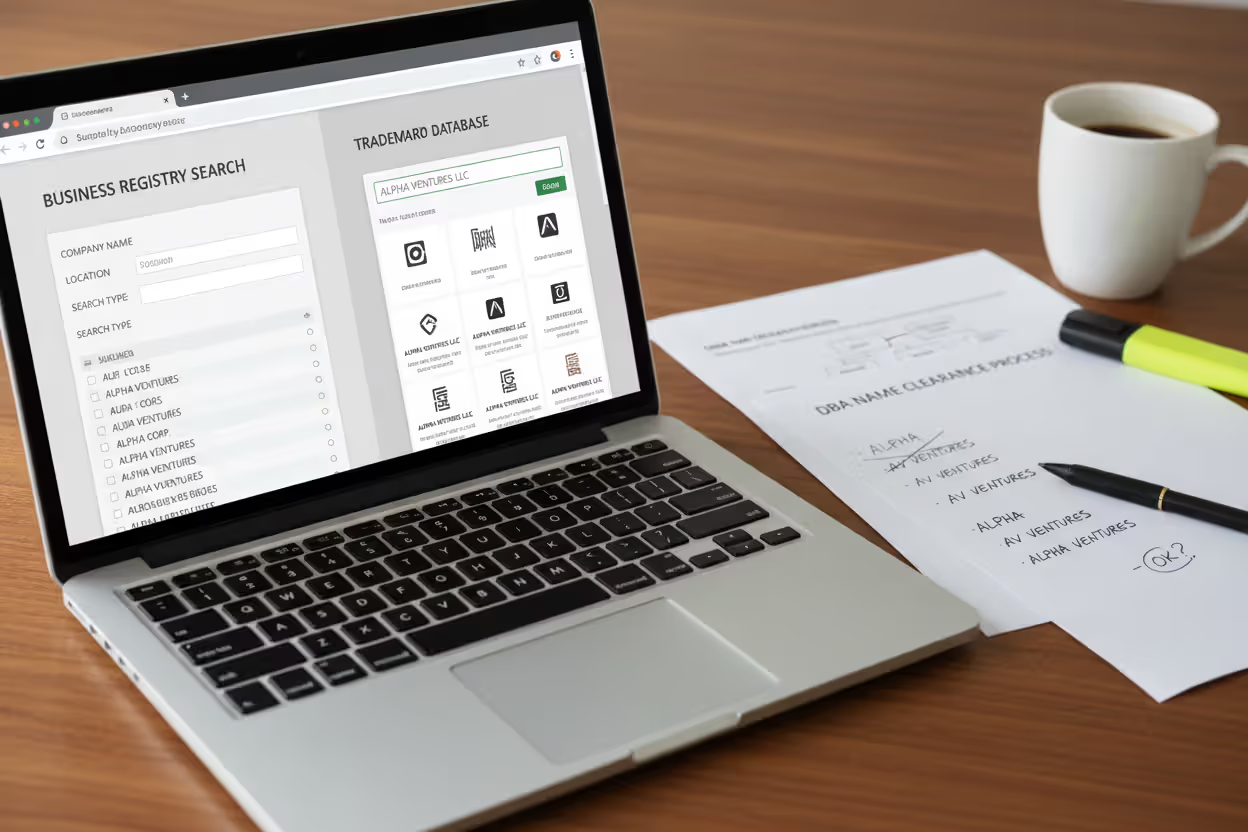
Never file for a DBA without first confirming the name is actually available. States reject names that duplicate or closely resemble existing businesses—whether they're LLCs, corporations, or other DBAs already on file.
Begin by searching your Secretary of State's business database. Look for your proposed name and reasonable variations of it. Finding a match or something suspiciously similar means choosing something else—you'll just waste your filing fee otherwise.
Check the USPTO's federal trademark database as well. State DBA registration doesn't technically require federal trademark clearance, but building a brand around someone's trademarked name creates legal headaches and potential rebranding costs you'd rather avoid.
County-level searches matter in states where clerks handle DBA filings locally rather than at the state level. A name might pass the statewide check but already be registered right in your own county.
Don't stop at official databases: search Google thoroughly, check major social platforms, and verify domain availability. You want a name that's not just legally open but practically usable for establishing an online presence.
Author: Samantha Rowe;
Source: worldwidemediums.net
File DBA Registration
After confirming availability, submit your DBA registration to whichever government office handles them in your state. The destination varies:
State office filing: Many states centralize DBA registrations through the Secretary of State or comparable agency. You'll complete forms (frequently titled "Fictitious Name Registration" or "Assumed Name Certificate") providing your LLC's official name, your desired DBA, principal address, and member or manager information.
County office filing: Other states delegate this to county clerks in whichever county serves as your LLC's principal location. Operating across multiple counties might require separate filings in each.
Dual filing systems: Some states want both—a state filing and county registration.
Expect fees between roughly $10 and $100 based on your jurisdiction. Many states now accept online submissions, cutting processing from several weeks down to just a few business days compared to mailed paper forms.
Save copies of your approved DBA registration—you'll need documentation for subsequent steps and to prove your legal right to the name if questions surface later.
Update Business Licenses and Bank Accounts
Once your DBA registration receives official approval, bring your business accounts and licenses up to date with the new name.
Notify your bank about adding the DBA to your LLC's existing business account. Banks want proof of registration before they'll let you deposit checks written to your trade name. Bring your DBA certificate and your LLC's EIN paperwork. The bank typically adds your DBA as another authorized name on the same account rather than creating something separate.
If you process credit cards, contact your payment processor too. Their records need updating to handle transactions showing your DBA name.
Review your business licenses and permits for any that reference your business name. This might include professional credentials, health department permits, sales tax certificates, or occupational licenses depending on your industry. Some jurisdictions handle this as a basic amendment; others want fresh applications.
Call your insurance agent to add the DBA to your coverage. Your general liability, professional liability, and other policies should reflect the DBA to ensure incidents occurring under that name get properly covered.
Publish a DBA Notice (if required by state)
Various states mandate publishing notice of your DBA in a local newspaper, usually one approved for legal announcements in your county. This publication creates another layer of public awareness about your business name.
When your state requires publication, you'll generally run the notice weekly for a set duration—often three or four consecutive weeks. The published notice contains your LLC's legal name, the DBA you're adopting, your address, and sometimes your business activities.
Once publication concludes, the newspaper issues an affidavit confirming completion. File this affidavit with whichever office handled your DBA registration (state or county) to demonstrate compliance.
Publication expenses vary substantially based on newspaper advertising rates and your state's specifications, typically falling between $40 and $200. Some states let you use less expensive publications, while others designate specific newspapers, so research your options before committing.
Ignoring publication requirements where they exist can trigger penalties or invalidate your DBA entirely, so treat this step seriously if your state mandates it.
LLC DBA Requirements by State
States take remarkably different approaches to DBA administration, affecting your filing location, costs, and maintenance schedule. Here's how requirements compare across major states:
| State | Registration Cost | Filing Location | Newspaper Publication | How Often to Renew | Typical Processing |
| California | $26 | County Clerk's office | Required | Every 5 years | 5-10 business days |
| Texas | $25 | County Clerk's office | Required in certain counties | Every 10 years | 3-5 business days |
| Florida | $50 | Division of Corporations | Not required | Every 5 years | 3-5 business days |
| New York | $25 | County Clerk's office | Required | Every 5 years | 1-2 weeks |
| Illinois | $150 | Secretary of State | Required | Every 5 years | 2-3 weeks |
| Pennsylvania | $70 | Department of State | Required | Every 10 years | 7-10 business days |
| Ohio | $39 | County Recorder's office | Not required | Every 5 years | 5-7 business days |
| Georgia | $25 | County Clerk's office | Required | No expiration | 3-5 business days |
These amounts reflect basic registration fees only. Newspaper publication, expedited handling, and renewal submissions cost extra. Notice that states like Georgia never require renewal—your DBA stays active until you formally abandon it or close your LLC.
Always confirm current procedures and fees with your particular state and county, since requirements and pricing change periodically.

Author: Samantha Rowe;
Source: worldwidemediums.net
Can You Change a DBA to an LLC?
This question reveals a common confusion about what DBAs and LLCs actually are. You can't "convert" a DBA into an LLC because they're completely different things—a DBA is merely a name registration, while an LLC is a legal business structure with liability protection and tax implications.
That said, if you've operated as a sole proprietor or partnership using a DBA and now want an LLC's protections and benefits, you can form an LLC and move your business operations into it. Here's the process:
Start by filing Articles of Organization to create a new LLC in your state. You can give this LLC the same name as your current DBA (assuming it's available as an LLC name) or pick a different legal name and keep using your established DBA as a trade name under the new LLC.
Transfer your business assets, agreements, and obligations into the newly formed LLC. This typically involves reassigning intellectual property, updating or transferring leases, revising vendor contracts, and moving business banking relationships. For significant assets or complicated contracts, work with an attorney to ensure transfers are executed correctly.
Update all your business registrations and licenses to show the LLC as the new owner. This includes obtaining a new EIN (you'll almost certainly need one for the LLC), updating sales tax registrations, transferring professional licenses, and handling industry-specific permits.
If you want to preserve your established business name, file it as a DBA under your new LLC. This maintains brand recognition and customer relationships while giving you the LLC's legal structure.
Properly close your previous business structure. Sole proprietors mainly need to handle final tax filings. Partnerships require formal dissolution according to state partnership laws.
When does this transition make sense? Consider moving to an LLC when liability protection becomes important—typically when you're signing commercial leases, bringing on employees, borrowing significant money, or accumulating substantial assets. The annual cost of LLC maintenance (ranging from $50 to $800 depending on your state) should be justified by the protection and professional credibility it delivers.
Common Mistakes When Adding a DBA to an LLC
The DBA registration process seems straightforward, but these frequent errors trip up many LLC owners:
Jumping into filing without researching name availability. Some entrepreneurs get attached to a name and file immediately without thorough research. When the registration gets rejected for conflicting with existing businesses, they've burned time and filing fees. Even worse, they may have already ordered signs, built websites, or printed marketing materials for a name they can't legally use.
Overlooking state-specific publication mandates. In states requiring newspaper publication, some LLC owners complete the initial registration but never publish the required legal notice. This leaves the DBA registration incomplete and potentially unenforceable, creating complications if you need to use contracts or handle legal matters under that name.
Failing to update banking and merchant accounts. Your bank doesn't automatically learn about your DBA. Start receiving checks payable to your DBA name without first updating your account, and you'll encounter processing delays and possibly returned payments. Credit card processors similarly need advance configuration to handle your trade name properly.
Using the DBA before registration approval comes through. Some business owners begin marketing and operating under their new name immediately after submitting paperwork, before official approval. If the filing gets rejected or delayed, they've created marketplace confusion and potentially violated business name regulations.
Confusing which name belongs on official documents. Your LLC's legal name goes on tax returns, formal contracts, official filings, and legal documents requiring precision. Save the DBA for marketing materials and customer communications. Using the DBA where your legal name is required creates compliance problems and can compromise contract enforceability.
Letting renewal deadlines pass. States requiring periodic DBA renewal rarely send reminders. Miss your deadline and your DBA lapses, forcing you to re-register (and potentially re-publish), while you're technically operating under an unregistered name.
Believing a DBA creates legal separation. DBAs don't establish liability protection or tax distinction from your LLC. Everything done under the DBA counts as LLC activity. Some business owners mistakenly think DBAs create barriers between different business functions, but legally everything remains one entity.
Many LLC owners underestimate how DBAs can strategically enhance business flexibility.Thoughtfully structured DBAs enable you to explore new markets, divide customer segments, and develop separate brands without absorbing the expense and administrative burden of creating multiple LLCs. The critical understanding is that your DBA serves as a marketing and operational instrument, not a legal structure—you must maintain proper LLC governance and compliance no matter how many trade names you're operating under
— Jennifer Hartman
Frequently Asked Questions About LLC DBAs
Registering a DBA under your LLC delivers the flexibility to operate multiple brand identities while preserving a single legal entity. The registration sequence—confirming name availability, submitting paperwork to the correct state or county office, updating banking and licensing, and publishing notices where mandated—remains manageable but demands attention to your state's particular requirements.
DBAs prove valuable when you need distinct brands for separate product lines, plan to operate a franchise, or simply prefer a more customer-appealing name than your LLC's legal designation. Just keep in mind that a DBA registers a name, not a separate legal entity or liability barrier.
Before proceeding, confirm your state's current filing procedures, costs, and renewal obligations. The modest investment of time and registration fees can deliver years of branding flexibility and operational efficiency for your LLC.
Related Stories

Read more

Read more



The content on this website is provided for general informational and educational purposes only. It is intended to explain concepts related to Limited Liability Companies (LLCs), including formation, management, taxation, compliance, and business structuring.
All information on this website, including articles, guides, templates, and examples, is presented for general educational purposes. LLC requirements and regulations may vary depending on individual circumstances, business activities, state laws, and jurisdiction.
This website does not provide legal, tax, or financial advice, and the information presented should not be used as a substitute for consultation with qualified legal, tax, or financial professionals.
The website and its authors are not responsible for any errors or omissions, or for any outcomes resulting from decisions made based on the information provided on this website.