

LLC formation documents on a desk with laptop and pen
LLC Articles of Organization Guide

Content
Content
Starting an LLC means you'll need to file paperwork with your state—there's no way around it. That critical document? It's called the articles of organization, and filing it is what actually brings your business to life legally. Think you can skip it and just start operating? Not unless you want your personal bank account treated like a business piggy bank by creditors.
What Are Articles of Organization for an LLC?
When you submit articles of organization to your state's business filing office, you're essentially asking permission to operate as a limited liability company. This isn't some bureaucratic formality—it's the document that transforms your business idea into a recognized legal entity that exists separately from you personally.
Here's what trips people up: they confuse this filing with an operating agreement. Big difference. Your articles of organization go straight to the Secretary of State and land in public records where anyone can look them up. Your operating agreement? That stays private among the owners, spelling out who gets what profits, how you'll vote on decisions, and what happens if someone wants out.
I like to explain it this way: articles of organization work like your business's birth certificate—proof it exists. The operating agreement is more like house rules—how everyone agrees to behave.
Why does filing this document matter so much? Several reasons:
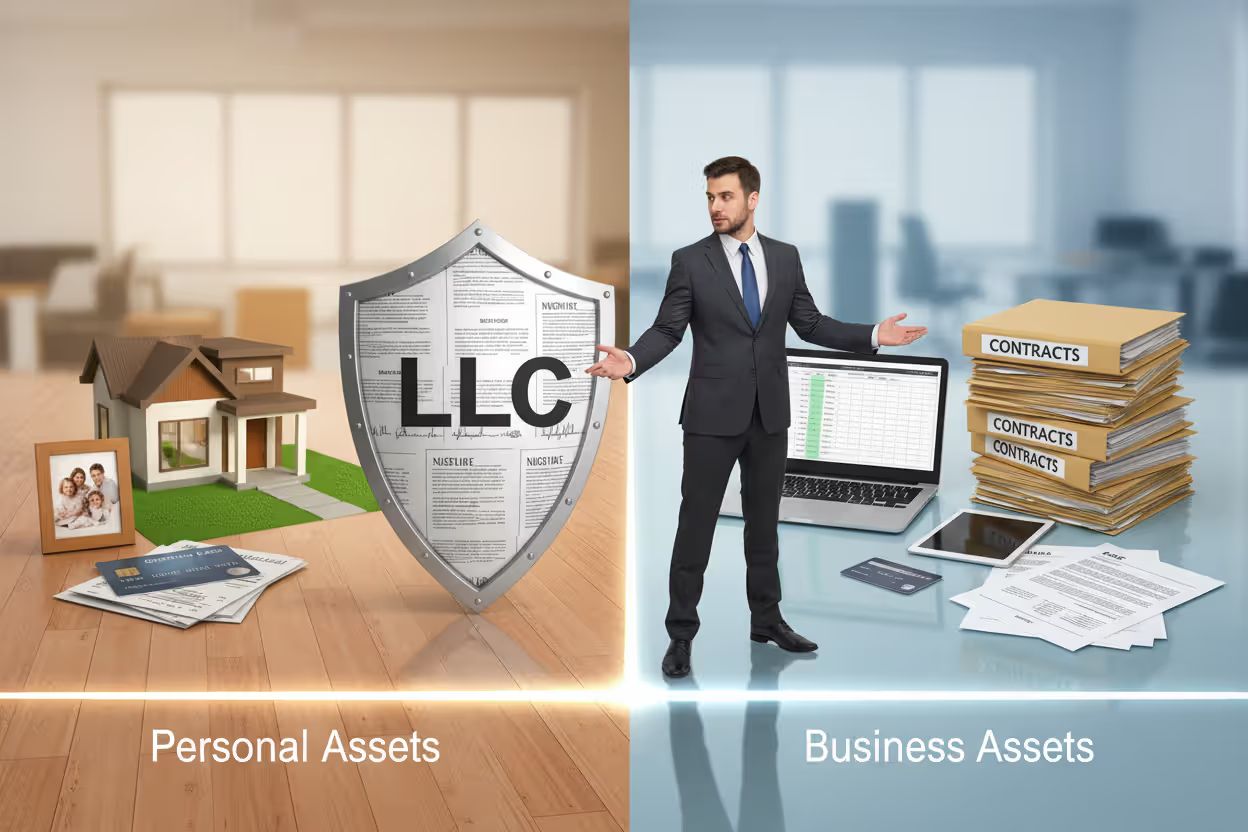
- Creates a separate legal entity, putting a wall between your personal stuff and business debts
- Activates limited liability protection so creditors can't come after your house if the business tanks
- Registers your official business name for legal contracts and court proceedings
- Tells the world who accepts legal papers when someone sues your company
- Puts basic company details on public record for banks, partners, and licensing agencies
Skip filing articles of organization, and legally you're just running a sole proprietorship (if you're alone) or a partnership (if there are multiple owners). Translation: your personal assets are fair game for business problems.
Author: Daniel Whitlock;
Source: worldwidemediums.net
What Information Goes in Articles of Organization?
States don't agree on much when it comes to LLC formation, but they all want certain basic information in your articles of organization for llc. What you'll definitely need to include:
LLC Name: You can't just pick any name you like. It must include "Limited Liability Company," "LLC," or "L.L.C." somewhere in there. And it needs to be different enough from existing businesses—not just one comma or period away from "Sunshine Consulting LLC" that someone already registered.
Registered Agent Details: Every LLC needs someone designated to receive lawsuits, tax notices, and official mail. This person (or company) must maintain a physical street address in your formation state—P.O. boxes don't count. They also need to be around during normal business hours. You can do it yourself, hire a service for $100-300 annually, or ask a business partner to handle it.
Principal Business Address: Where does your LLC actually operate? Some states want both your main office location and a separate mailing address if they're different places.
Management Structure: Will the owners (members) run daily operations themselves? Or are you appointing managers to handle that? This choice matters because it determines who can sign contracts and make binding commitments for the company.
Member or Organizer Information: States split on this requirement. Some want a complete list of all members with their addresses. Others just need the name of whoever's filing the paperwork (the organizer). California demands member details. Delaware? Perfectly happy with just the organizer's name for anonymous formation.
Purpose Clause: What will your LLC actually do? Most smart business owners go broad here: "to engage in any lawful business activity" gives you flexibility. Getting too specific—say, "sell handmade jewelry"—boxes you in if you later want to expand into other products.
Duration: Should your LLC exist forever or dissolve on a specific date? Unless you have a particular reason to sunset the business, choose perpetual existence.
Effective Date: Many states let you pick when your LLC officially begins—either when they approve your filing or a future date you specify.

Author: Daniel Whitlock;
Source: worldwidemediums.net
Required vs Optional Provisions by State
The LLC formation landscape resembles a patchwork quilt—every state cuts a different pattern. California insists on member names and addresses in your public filing. Delaware lets you hide behind an organizer's name, keeping actual owners anonymous. Texas requires you to declare member-managed or manager-managed status upfront. Wyoming makes that declaration optional.
Beyond mandatory fields, states let you add optional provisions:
- Dissolution events: Specific situations that automatically end the LLC
- Contribution requirements: How much capital each member must kick in initially
- Profit distribution formulas: The math behind splitting earnings
- Transfer restrictions: Rules limiting who can buy or inherit membership interests
Should you pack your articles of organization with detailed provisions? Most attorneys say no. Here's why: articles become public record the moment they're filed. Your competitor can pull them up and read your entire business strategy. Operating agreements stay private, keeping sensitive arrangements confidential.
There's also a practical angle. Need to change something in your articles? You'll file amendments and pay fees every time. Modifying an operating agreement just requires member approval—no state filing, no fees, much faster.
How to File Articles of Organization
Ready to file articles of organization? Here's the actual process, step by step:
Step 1: Check Name Availability
Hit your Secretary of State's business name database and search for your desired LLC name. Free online search tools exist in every state. Found something too similar? Pick a different name. Not ready to file today? Reserve your name for 60-120 days (costs typically $10-50) so nobody grabs it while you prepare.
Step 2: Prepare the Document
Download your state's official form from their website. Many states offer fill-in PDFs. Others accept whatever you create as long as it contains required information. Complete every field, triple-checking addresses, names, and where signatures go. Adding optional provisions? Consider privacy implications before including them.
Step 3: Submit to the Secretary of State
Send your completed paperwork to the right agency (usually Secretary of State, though some states use different departments). Include payment—check, money order, or credit card for online submissions work in most places.
Step 4: Pay Filing Fees
Budget $40 to $500 depending on where you're forming. Some states tack on extra charges for rush processing, certified copies, or name reservations. Know these costs upfront.
Step 5: Receive Approval
Now you wait. Expedited online filings might approve same-day. Standard mail submissions? Could take several weeks. Once approved, you'll get back stamped articles of organization or a certificate of organization—official proof your LLC exists.

Author: Daniel Whitlock;
Source: worldwidemediums.net
Online vs Mail Filing Options
Online filing beats mail in almost every scenario. Benefits include:
- Instant checking that you've filled everything out correctly
- Faster approval (often 1-5 business days instead of 2-4 weeks)
- Electronic payment convenience
- Automatic email updates on your application status
- Digital copies immediately downloadable
When would you mail instead? If your state hasn't built an online system yet, or if you're including custom provisions that don't fit their web form. Mail filing means dealing with payment restrictions (many states won't take credit cards) and much longer processing with zero visibility into where your application sits.
A few states split the difference: file online but mail supporting documents separately. For instance, if a business entity serves as your registered agent, you might submit articles online but mail that agent's written consent separately.
Articles of Organization vs Certificate of Organization
Here's something that confuses everyone initially: "articles of organization" and "certificate of organization" mean the exact same thing. Different states just prefer different terminology. When you file articles, some states respond by issuing a certificate as proof, while others stamp your original filing and return it.
Which term does your state use? Here's the breakdown:
"Articles of Organization" states: California, Texas, Illinois, Pennsylvania, Ohio, Michigan, Georgia, North Carolina, New Jersey, Virginia, Washington, Arizona, Massachusetts, Indiana, Missouri, Wisconsin, Maryland, Minnesota, Colorado, Alabama, South Carolina, Louisiana, Kentucky, Oregon, Oklahoma, Connecticut, Iowa, Kansas, Nevada, Arkansas, Mississippi, Utah, New Mexico, West Virginia, Nebraska, Idaho, Hawaii, Maine, New Hampshire, Rhode Island, Montana, South Dakota, North Dakota, Alaska, Vermont, Wyoming
"Certificate of Organization" states: Delaware, New York (Florida uses "Articles of Organization" but issues a "Certificate of Status" afterward)
Why does that certificate of organization or approved articles document matter so much? You'll need it to:
- Open business bank accounts—banks won't talk to you without proof your LLC exists
- Sign contracts with authority to bind the company
- Apply for business licenses and permits
- Establish business credit lines
- Prove your business structure to the IRS
Get multiple certified copies right away. Banks and government agencies frequently demand originals or certified copies—photocopies won't cut it. Ordering certified copies costs $5-30 per copy in most states, which beats scrambling to get more later when you're in a time crunch.
State Filing Fees and Processing Times
Want to file articles of organization? The bill varies wildly depending on where you form. Some states view LLC fees as revenue sources; others keep costs minimal to attract businesses:
| State | Document Name | Filing Fee | Standard Processing | Online Filing | Publication Required |
| California | Articles of Organization | $70 | 5-7 business days | Available | Not required |
| Delaware | Certificate of Formation | $90 | 7-10 business days | Available | Not required |
| Florida | Articles of Organization | $125 | 3-5 business days | Available | Not required |
| Illinois | Articles of Organization | $150 | 10-15 business days | Available | Not required |
| New York | Articles of Organization | $200 | 7-10 business days | Available | Required |
| Texas | Certificate of Formation | $300 | 5-7 business days | Available | Not required |
| Nevada | Articles of Organization | $75 + $200 list fee | 2-3 business days | Available | Not required |
| Wyoming | Articles of Organization | $100 | 3-5 business days | Available | Not required |
| Massachusetts | Certificate of Organization | $500 | 7-10 business days | Available | Not required |
| Pennsylvania | Certificate of Organization | $125 | 7-10 business days | Available | Not required |
Those timeframes assume standard filing—no expedited service. Need faster approval? Most states sell it:
- Same-day processing: Add $50-$1,000 depending on the state (Delaware, Nevada, and Wyoming offer this)
- 24-hour processing: Extra $25-$500
- 3-5 day processing: Extra $10-$100
What affects how quickly your filing moves through the system?
- Filing method: Online always beats mail
- Time of year: December and tax season create massive backlogs
- Document complexity: Custom provisions slow things down versus standard forms
- State staffing levels: Budget cuts mean fewer people processing applications
- Errors or omissions: Incomplete filings bounce back to you, resetting your timeline to zero

Author: Daniel Whitlock;
Source: worldwidemediums.net
Common Mistakes When Filing Articles of Organization
Even straightforward filings hit snags when people overlook details. Watch out for these traps:
Name Availability Errors: Checking name availability Monday and filing Friday? Someone might grab your name Tuesday. Either file immediately after confirming availability or pay for name reservation to lock it down.
Registered Agent Information Problems: Listing a P.O. box instead of a street address? Automatic rejection. Naming someone as registered agent without asking them first? Legal nightmare when they refuse to accept papers served to your company. Using your home address? Congratulations, you just published your residential address in public records—hope you like unexpected visitors.
Missing or Invalid Signatures: Not every state accepts digital signatures, even for online filings. Some still want original ink on paper for mailed documents. Signing as "member" when you're listed as "organizer" creates confusion that delays approval. Need multiple signatures? Missing one sends everything back.
Incomplete Address Information: Your state's form wants "Ste." but you wrote "Suite"? That might cause problems. Forgot the apartment number? Official mail won't reach you. International addresses need specific formatting that varies by state. Rural route addresses without proper USPS formatting get flagged.
Improper Service of Process Details: Some states require specific language about how your registered agent accepts legal papers on the company's behalf. Generic statements or omitted clauses mean rejection. The registered agent's acceptance might need separate filing or inclusion with your articles, depending on state requirements.
Mismatched Information: Reserved "ABC Consulting LLC" but your articles say "ABC Consulting, LLC"? That punctuation difference causes problems. Inconsistent naming between sections requires clarification before approval.
Incorrect Fee Calculations: States charging fees based on authorized capital or member count require careful math. Underpay and processing stops until you send more money. Overpay? Don't expect automatic refunds—you'll request the difference back yourself.
After You File Articles of Organization

Author: Daniel Whitlock;
Source: worldwidemediums.net
Got your approved llc certificate of organization in hand? Great—but you're just getting started. Several critical tasks remain:
Obtain an Employer Identification Number (EIN): Head to the IRS website and apply for an EIN, even without employees. Banks require EINs for business accounts, and using your Social Security number for business purposes risks identity theft. The IRS issues EINs free and immediately through their online application.
Open a Business Bank Account: Keeping personal and business finances separate isn't optional—it's essential for protecting your limited liability. Mix personal and business money, and creditors can argue you're not really operating as a separate entity, making your personal assets vulnerable. Bring your certificate of organization, EIN confirmation letter, and government ID to the bank. Many banks also want to see your operating agreement.
Create an Operating Agreement: Most states don't require filing this document, but you need one anyway. It prevents disputes among members and proves to courts that you're running a legitimate separate entity—not just using LLC status as a shield while really operating as yourself. Cover profit distribution, voting procedures, member duties, buyout processes, and dissolution terms. Even single-member LLCs benefit from operating agreements—they demonstrate you treat the LLC as distinct from yourself personally.
Register for State Taxes: Beyond federal taxes, you might need state income tax withholding, sales tax permits, unemployment insurance registration, or other state-specific tax accounts. Requirements vary dramatically—Texas has no state income tax but charges franchise taxes, while California hits you with an $800 annual minimum franchise tax regardless of whether you made any profit.
Obtain Business Licenses and Permits: Filing articles of organization doesn't automatically authorize you to conduct business. Professional licenses, local business permits, zoning approvals, health department certifications, and industry-specific authorizations might all be required before you legally open for business.
File Publication Requirements: New York, Nebraska, and Arizona force newly formed LLCs to publish formation notices in designated newspapers for specific periods. Ignore this requirement and face LLC suspension. Publication costs range from $50 in rural counties to over $1,500 in expensive markets like Manhattan.
Comply with Annual Requirements: Nearly all states require annual reports, franchise tax payments, or registered agent fee renewals. Miss these deadlines and watch penalties pile up, leading eventually to administrative dissolution of your LLC. Set recurring calendar reminders for every compliance deadline.
Maintain Corporate Formalities: Hold member meetings (yes, even if you're the sole member), write up minutes documenting major decisions, update your operating agreement when circumstances change, and organize business records properly. These practices strengthen liability protection by showing courts you operate your LLC as a genuine business entity—not just as an extension of yourself.
The biggest mistake I see entrepreneurs make is treating LLC formation as a one-time event rather than an ongoing commitment. Filing articles of organization creates your company, but maintaining it requires consistent attention to compliance deadlines, proper record-keeping, and separation of personal and business affairs. The legal protection an LLC offers only works if you respect the formalities that come with it
— Jennifer Martinez
Frequently Asked Questions
Articles of organization transform your business concept into a legally recognized limited liability company—no filing, no LLC, no limited liability protection. Understanding what information this document requires, how to submit it correctly, and what comes next positions you for successful LLC formation and operation.
The filing process itself is manageable for most entrepreneurs, especially with standardized forms and online systems available in nearly every state. Prioritize accuracy over speed—verifying name availability, confirming registered agent details, and double-checking addresses prevents rejection delays that ultimately extend your formation timeline.
Remember: filing articles of organization starts your LLC journey but doesn't end it. The legal protections and tax benefits an LLC provides depend on maintaining proper separation between personal and business affairs, meeting ongoing compliance requirements, and respecting corporate formalities. Your approved certificate of organization opens doors to business banking, licensing, and operations, but long-term success requires attention to the administrative responsibilities that come with LLC status.
Related Stories

Read more

Read more



The content on this website is provided for general informational and educational purposes only. It is intended to explain concepts related to Limited Liability Companies (LLCs), including formation, management, taxation, compliance, and business structuring.
All information on this website, including articles, guides, templates, and examples, is presented for general educational purposes. LLC requirements and regulations may vary depending on individual circumstances, business activities, state laws, and jurisdiction.
This website does not provide legal, tax, or financial advice, and the information presented should not be used as a substitute for consultation with qualified legal, tax, or financial professionals.
The website and its authors are not responsible for any errors or omissions, or for any outcomes resulting from decisions made based on the information provided on this website.