

Business owner reviewing LLC meeting minutes documents at an office desk
LLC Meeting Minutes Template Free Download and Guide

Your LLC's paperwork might seem boring until you need it. That's when business owners discover that skipped meeting minutes can cost them everything—literally. Personal bank accounts, homes, retirement savings—all potentially exposed because they treated their LLC like a hobby instead of a real business.
Here's what most people miss: meeting minutes aren't just busywork. They're the proof that your business exists as something separate from you. Without them, a judge might decide your LLC is just a shell, stripping away the liability protection you counted on.
Running a one-person operation? You still need this. Managing a team of partners? Definitely need it. The good news: proper documentation takes maybe an hour per year once you know what you're doing.
What Are LLC Meeting Minutes and Why They Matter
Think of meeting minutes as your business diary—except instead of feelings, you're recording decisions. Who showed up to the meeting? What did everyone vote on? Which major choices did the company make? That's what goes in these records.
Here's why this matters more than you think.
The liability shield only works if you use it correctly. Let's say your LLC gets sued. The plaintiff's attorney will dig through everything looking for proof that you treated your company like a personal checkbook. Missing meeting minutes? That's exhibit A in their argument that your LLC is fake and you should be personally liable.
Courts call this "piercing the corporate veil," and they love doing it to lazy business owners. A 2019 case in Florida stripped LLC protection from an owner who couldn't produce any meeting records. The judge basically said: "You didn't treat this like a real company, so we won't either." That owner lost his house.
The IRS wants proof too. During audits, they'll ask how you decided on your salary. Or why the LLC bought that $8,000 computer. Or what justified a $50,000 distribution in March. Meeting minutes answer these questions. Without them, you're scrambling to recreate your reasoning from memory—never a good look during an audit.
Different states handle this differently. Wyoming doesn't mandate meeting minutes by statute. California doesn't either, technically. But both states' courts have held LLCs to higher standards when personal assets were at stake. The law might not require minutes, but judges expect them anyway.
Banks and serious investors won't work with you otherwise. Try getting a business loan without any corporate records. The bank will either reject you outright or offer terrible terms because you look unprofessional and risky. Same with equity investors—they'll walk away from deals with companies that can't produce basic governance documentation.

Author: Samantha Rowe;
Source: worldwidemediums.net
Your operating agreement probably requires meetings and minutes anyway. Most templates include language about annual meetings and record-keeping. By skipping minutes, you're violating your own company's rules, which courts find particularly damning.
When Your LLC Needs Meeting Minutes
Annual meetings are your baseline. Pick a date—same time every year works great—and stick with it. First Monday in March. Your birthday. Whatever's memorable. Most operating agreements require at least one member meeting annually, and this is where you'd review how the company performed, confirm who's managing things, and make any necessary adjustments.
Even if your operating agreement somehow doesn't mention annual meetings, hold them anyway. The pattern matters. Five years of consecutive annual minutes tells a much better story than sporadic documentation whenever you remember.
Special meetings happen when life gets interesting. Your biggest client offers to buy you out. A supplier sues. You need to take an emergency loan. Someone wants to join as a new member. These situations can't wait for the annual meeting, so you call a special session and document it right away.
What counts as "special meeting worthy"? Any decision involving serious money or major changes. Some companies use a $5,000 threshold—anything above that gets formal minutes. Others base it on whether the decision affects the company's structure or direction.
Member meetings versus manager meetings serve different purposes. In member-managed LLCs (where owners run everything), you mainly have member meetings. In manager-managed structures, you've got managers handling daily operations and members weighing in on big-picture stuff.
Members might meet to approve a new operating agreement. Managers might meet to approve a new vendor contract. The separation matters because each group has different authority levels defined in your operating agreement.
Single-member LLC owners often skip this entirely—huge mistake. California doesn't require solo LLCs to document anything formally. Neither does Delaware or New York. Know what else those states don't require? That you keep your personal and business assets separate at all. But try telling a judge you don't need to do that and see what happens to your house when the LLC gets sued.
Banks absolutely require meeting minutes from single-member LLCs for business accounts and loans. They've seen too many solo operators treating business accounts like personal slush funds. Minutes prove you're serious.
A good rule of thumb: document anything that moves money, changes your structure, or commits the company to something significant. New lease? Minutes. Bank account? Minutes. Hired your first employee? You get the idea.
What to Include in LLC Meeting Minutes
Required Elements for Formal Minutes
Start with the basics anyone reviewing your records will need. Put your LLC's full legal name at the top—not your DBA, the actual registered name. Include the complete date and specific time the meeting started. Note the location, whether that's "Conference Room B at 450 Oak Street" or "Zoom video conference."
Mark whether this is a regular annual meeting or special meeting. That classification tells readers what kind of authority the meeting had and what issues could legitimately be addressed.
List everyone present by full name and role. "Sarah Chen, Member and Manager" tells the whole story. "Michael Torres, Member" identifies his capacity. If your attorney attended, note "Jennifer Adams, Legal Counsel (non-voting advisor)." This prevents confusion later about who could vote.
Quorum matters more than people realize. Your operating agreement probably says something like "a majority of members must be present." Confirm you met that threshold: "Quorum established with both members present, representing 100% of membership interests." Without quorum, your meeting decisions might not be valid.
For each topic discussed, record what was decided—not the entire conversation. You don't need: "Sarah suggested we consider a credit line. Michael asked about interest rates. Sarah explained that First National offered 7.5% while Community Bank offered 8.2%. Michael wondered about fees..."
You need: "Members approved opening a $50,000 business line of credit with First National Bank at 7.5% interest rate."
See the difference? One tells the story. The other documents the decision.
Resolutions need precise language. Use formal structure: "RESOLVED: That Green Valley Marketing LLC is authorized to enter into a three-year office lease at 123 Main Street, Suite 200, at $3,500 per month, and Sarah Chen is authorized to execute all necessary documents on behalf of the LLC."
That resolution is specific enough that the landlord's attorney can read it and confirm authorization. Vague resolutions ("approved new office space") create problems when third parties need proof of authority.
Vote counts matter in multi-member LLCs. Don't just write "approved." Write "Motion approved 3-1, with Johnson opposing" or "Motion approved unanimously." In smaller LLCs, listing each person's vote works well: "Chen—yes, Torres—yes, Williams—abstained."
Signatures make it official. At minimum, whoever prepared the minutes signs and dates at the bottom. Many LLCs also have the meeting chair or all attending members sign. More signatures equal more formality, which equals better liability protection.

Author: Samantha Rowe;
Source: worldwidemediums.net
Optional but Recommended Information
Context helps future readers understand your thinking. "To reduce overhead costs given Q4 revenue decline" explains why you downsized office space. "In response to competitor expansion into our territory" justifies a new marketing budget. You don't need paragraphs—one phrase provides valuable background.
Reference supporting documents without necessarily attaching them all. "Members reviewed the Financial Statement dated December 31, 2025, prepared by Adams CPA." Now if questions arise later, everyone knows where to find the supporting data. Some LLCs attach key documents; others just file them in the same folder.
Conflicts of interest deserve explicit documentation. "Member Johnson disclosed his 30% ownership in ABC Supplies prior to discussion of the ABC supply contract. Johnson abstained from voting on this matter." This protects both the conflicted member and the company by showing transparency.
Planning ahead? Note the next meeting date: "Next annual meeting scheduled for March 15, 2027, 10:00 AM, same location." Simple and keeps everyone coordinated.
Free LLC Meeting Minutes Templates
Elements to Document: Meeting Minutes Checklist
| Element | Required/Optional | Example |
| LLC legal name and meeting date | Required | "Green Valley Marketing LLC—Annual Member Meeting—March 15, 2026" |
| Meeting type and where it happened | Required | "Annual Session, held at 450 Oak Street Conference Room" |
| Who attended with their roles | Required | "Present: Sarah Chen (Member/Manager), Michael Torres (Member)" |
| Quorum confirmation | Required | "Both members present, constituting 100% of membership" |
| Topics addressed | Required | "2025 financial review; 2026 budget approval; manager confirmation" |
| Specific decisions reached | Required | "RESOLVED: To distribute $75,000 to members based on ownership percentage" |
| How people voted | Required | "Approved with both members voting yes" |
| Preparer signature and date | Required | "Prepared and certified by Sarah Chen, Secretary, March 15, 2026" |
| Why decisions were made | Optional | "Distribution appropriate given strong Q4 results and adequate reserves" |
| Referenced documents | Optional | "See 2025 Financial Summary from Adams CPA dated March 1, 2026" |
| Any conflicts disclosed | Optional | "No member conflicts declared for any matter discussed" |
| When you'll meet next | Optional | "Next annual meeting: March 14, 2027" |
We've created several templates you can download and use immediately. Each addresses different LLC structures and situations, with bracketed guidance showing exactly what information goes where.
The Multi-Member LLC Annual Meeting Minutes Template works for companies with two or more owners holding yearly meetings. It includes sections for reviewing financials, confirming or electing managers, and handling standard annual business items. This template assumes members vote on matters and includes proper voting documentation.
The Single Member LLC Meeting Minutes Template recognizes you're playing all the roles yourself. It drops the voting language (since you can't outvote yourself) while keeping the formality needed for banks and liability protection. This version is streamlined but still professional.
The Special Meeting Minutes Template focuses on urgent matters that can't wait for annual meetings. It emphasizes why you called the meeting and zeros in on the specific issue requiring immediate attention. This template includes language about proper notice and member consent for special sessions.
The Manager Meeting Minutes Template serves manager-managed LLCs where designated managers handle day-to-day decisions. This format distinguishes between what managers can decide and what needs full member approval, keeping everyone in their proper lane.
All templates come as both editable Word documents and PDFs. The Word versions let you type directly into the template. The PDFs work if you prefer printing and completing by hand. Instructions appear in [brackets]—replace those with your actual details.
How to Write Meeting Minutes for Your LLC
Before everyone gathers, create an agenda listing what you'll discuss. Email it to participants at least three or four days early so people can prepare. Nobody likes getting blindsided with major decisions.
Pick someone to take notes. In formal LLCs, that's the secretary. In smaller operations, it might rotate among members or just fall to whoever types fastest. Have your template open and ready before the meeting starts—this makes real-time documentation much easier.
During the meeting, focus on capturing decisions rather than transcribing speeches. You're not a court reporter. When discussions get heated or lengthy, summarize the key points raised without taking sides. Use neutral language: "Members discussed equipment options including leasing from ABC Company versus purchasing from XYZ Supplier."
Get resolutions right while everyone's still there. When someone makes a motion, have them state it clearly enough to write down. Read it back before voting: "Just to confirm—we're voting on whether to approve a $25,000 marketing budget for Q2. Correct?" This prevents post-meeting disputes about what actually passed.
Within a day or two after wrapping up, clean up your notes while memory is fresh. Transform rough notes into proper minute format using your template. Add any details you abbreviated during the meeting, like full legal names or precise dollar amounts.
Check your work before sharing. Did you catch all decisions? Are vote counts accurate? Would someone who skipped the meeting understand what happened? This catches mistakes before minutes become official.
Send draft minutes to everyone who attended. Give people about a week to suggest corrections. This isn't an opportunity to change what happened—it's a chance to fix errors or clarify confusing language. "Actually, the approved amount was $35,000 not $25,000" is a valid correction. "I think we should have voted differently" is not.
Final approval typically happens at your next meeting. You vote to approve the previous meeting's minutes either as written or with specific amendments. Some LLCs handle this via email between meetings, especially when decisions are time-sensitive. Once approved, mark the minutes "Approved [date]" and collect final signatures.

Author: Samantha Rowe;
Source: worldwidemediums.net
File approved minutes in your LLC records book. Organization matters—date order works well so you can quickly locate specific meetings. Keep everything forever. Digital copies in cloud storage with backup are smart. Some companies maintain both physical and digital versions just to be safe.
Single Member LLC Meeting Minutes Requirements
Single-Member Compared to Multi-Member LLC Meeting Documentation
| Requirement Type | Single-Member LLC | Multi-Member LLC |
| State law requirements (typical) | Usually not mandated by statute | Often required in operating agreement |
| Quorum issues | Not applicable (you're always 100% present) | Must hit percentage specified in your operating agreement |
| How voting gets documented | Note "approved by sole member" for each decision | Record specific vote counts, who voted which way |
| Who signs | You sign in all your various roles | Multiple signatures or designated secretary |
| How often to meet | Annual recommended at minimum | Annual required, plus special meetings when needed |
| How formal to be | Can streamline but keep it professional | More formal with standard meeting procedures |
| Liability protection value | Critical—shows separation from personal affairs | Important—demonstrates proper governance |
| What banks/investors expect | Often required for loans, accounts, funding | Standard expectation across all business relationships |
Running a one-person LLC creates weird documentation dynamics. You're the sole owner, the manager, and the decision-maker. Holding a formal meeting with yourself feels ridiculous. Do it anyway.
State laws rarely require single-member LLCs to maintain meeting minutes explicitly. California, Delaware, New York—none mandate it by statute. But here's what those statutes don't tell you: courts expect it anyway when your personal assets are on the line.
Judges scrutinize single-member LLCs extra carefully. Without multiple owners creating natural checks and balances, you need to create formality through documentation. Regular meeting minutes showing you respect the LLC as separate from yourself significantly strengthen your liability shield.
A simplified approach works fine for solo owners. You don't need elaborate parliamentary procedure or formal "I move that..." language. Just document your decision-making process clearly:
"The sole member reviewed Q4 financial statements prepared by Adams CPA. After confirming adequate cash reserves of $42,000 and accounting for upcoming estimated tax payment of $8,000, the sole member approved a distribution of $15,000 to be paid on March 30, 2026."
That's professional documentation without ridiculous formality.
Hold at least one formal meeting each year, even though you're making business decisions constantly. Use this annual session to review financial performance, confirm your registered agent and business address, check whether your operating agreement needs updates, and formally document major decisions from the past year.
For significant mid-year decisions—taking a loan, signing a major contract, hiring your first employee—create special meeting minutes at the time. Documentation created when decisions happen carries more weight than reconstructed "memories" from months later.
Some single-member LLCs get creative with formality. They schedule their annual meeting on a specific date each year, sit at their office desk with coffee and financial statements, work through an agenda, and document everything properly. It might feel artificial at first, but that formality is exactly what protects your personal assets.
Common Mistakes When Recording LLC Meeting Minutes
Missing signatures sink your documentation. Minutes without signatures are just notes. Even in single-member LLCs, sign your minutes. That signature transforms notes into official company records. Courts notice the difference.
Vague resolutions cause problems years later. "Discussed marketing" tells nobody anything useful. Three years from now during an IRS audit, you'll have no idea what you actually decided. Instead: "Approved $10,000 monthly budget for digital advertising targeting Atlanta market, campaign running April-June 2026, with Torres managing implementation."
Specific resolutions help everyone—future you, auditors, attorneys reviewing documents, potential buyers doing due diligence.
Inconsistent documentation raises red flags. Documenting meetings for two years, skipping three years, then suddenly resuming creates suspicion about your commitment to proper governance. Courts notice gaps and wonder what you're hiding.
Build a routine. Put your annual meeting on the calendar the same time every year. Set a reminder. Treat it like a tax deadline—non-negotiable. If you've got gaps in your history, acknowledge them and commit to consistency going forward.
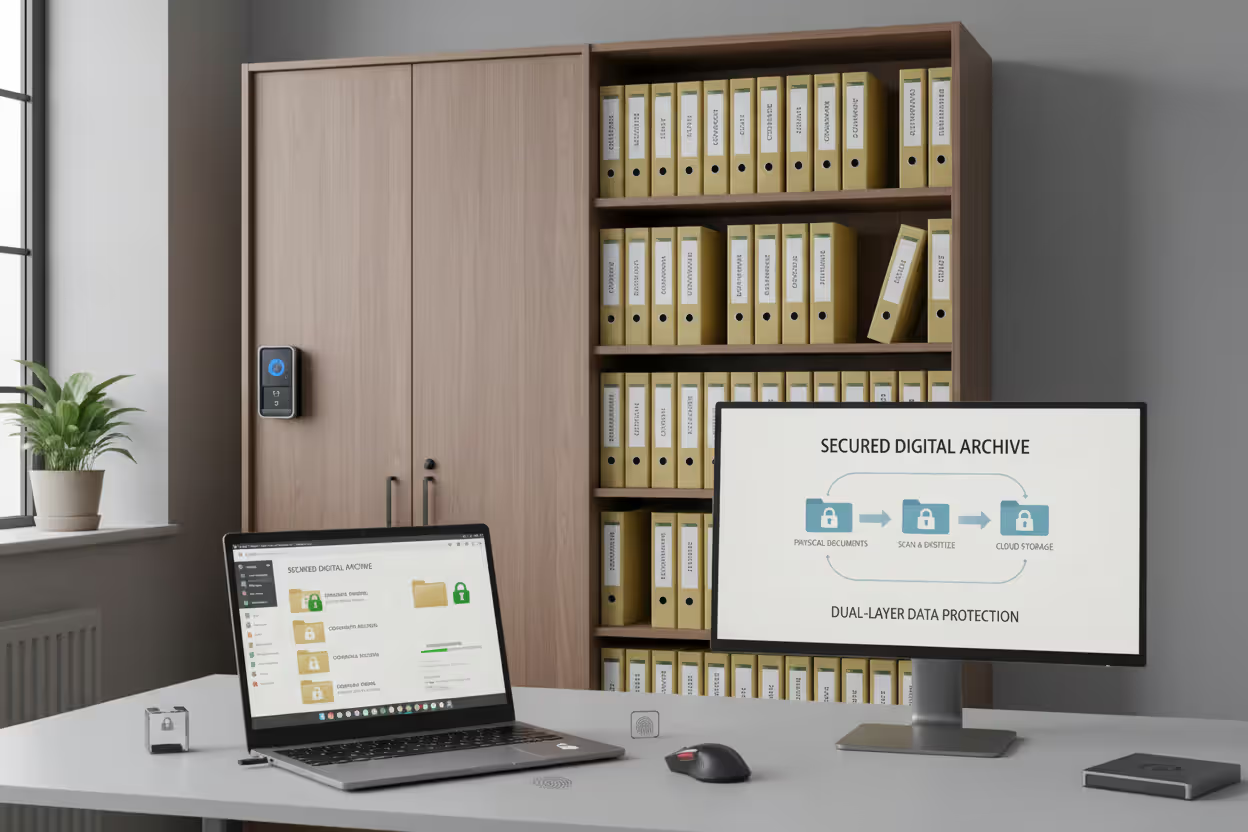
Storage problems lose records when you need them most. A three-ring binder labeled "LLC Records" in your office filing cabinet beats nothing. A fireproof safe is better. Best approach: digital copies in cloud storage (Dropbox, Google Drive, OneDrive) plus physical copies. Redundancy protects you.
Author: Samantha Rowe;
Source: worldwidemediums.net
Backdating minutes crosses into fraud territory. If you realize you should have documented a decision from six months ago, don't create minutes dated six months ago. Instead, create current minutes acknowledging the timing: "The member hereby ratifies and confirms the decision made in September 2025 to enter into a vendor agreement with ABC Supplies."
Honest documentation maintains credibility. Backdating destroys it.
Overly detailed minutes that read like transcripts create risk. Long, rambling documentation might capture statements better left out of the official record. Stick to decisions and essential context. You're creating business records, not historical archives of every comment someone made.
Ignoring dissent or concerns backfires later. If a member raises legitimate objections, document them even if the majority proceeds anyway. "Member Williams expressed concern about cash flow impact but voted yes after discussion of reserve levels." This protects the dissenting member and shows the LLC considered multiple perspectives.
Recording personal matters in LLC minutes blurs critical boundaries. Your LLC minutes document business decisions only. Personal financial planning, family matters, individual tax strategy—none of that belongs in company records. Keep it strictly business.
Meeting minutes represent the single most overlooked protection tool for LLC owners. I've witnessed cases where thorough minutes made the difference between personal liability and full corporate veil protection. The cost of skipping this step can devastate lives—personal homes, savings, retirement accounts at risk because someone couldn't spare an hour annually for basic documentation
— Robert Martinez
FAQ
Meeting minutes protect your assets while documenting your company's history. The templates and guidance here give you everything needed for professional, legally sound records without paying professionals for routine documentation.
Start now. Download the template matching your LLC structure. Schedule your next annual meeting today, even if it's months away—get it on the calendar. If you've never held formal meetings before, schedule a "ratification meeting" where you document past major decisions and commit to regular future documentation.
The hour invested annually in proper meeting minutes might prove invaluable during audits, lawsuits, or corporate veil challenges. This simple administrative task separates well-managed LLCs from casual operations that blur personal and business boundaries.
Templates provide structure, but your specific circumstances determine content. Adapt these resources to your operating agreement, state requirements, and business complexity. When facing significant decisions or complex situations, consult a business attorney to ensure your minutes adequately protect your interests.
Consistent documentation builds a compelling narrative that your LLC operates as a legitimate business entity deserving liability protection. Make meeting minutes a non-negotiable annual routine, just like filing taxes or renewing licenses. Your personal assets depend on this disciplined approach to corporate governance.
Related Stories
Read more

Read more




The content on this website is provided for general informational and educational purposes only. It is intended to explain concepts related to Limited Liability Companies (LLCs), including formation, management, taxation, compliance, and business structuring.
All information on this website, including articles, guides, templates, and examples, is presented for general educational purposes. LLC requirements and regulations may vary depending on individual circumstances, business activities, state laws, and jurisdiction.
This website does not provide legal, tax, or financial advice, and the information presented should not be used as a substitute for consultation with qualified legal, tax, or financial professionals.
The website and its authors are not responsible for any errors or omissions, or for any outcomes resulting from decisions made based on the information provided on this website.